Saturday, January 13, 2007

Newfoundland Dory

The dory was once a common sight around the harbors and coves of Newfoundland. These two man fishing boats were used to fish cod through the 1860's and into the 1960's. The Newfoundland version was a small 15 foot flat-bottomed boat with flaring sides and a sharp bow and stern. This provided a very stable floating platform and its design allowed easy stacking on the deck of a schooner.

Simeon Lowell who came from England to Massachusetts invented the dory in 1793. The name itself probably originated from a Nova Scotia redfish known as the "John Dory Fish". Some Newfoundland fishermen still build this "little Lady of the North Atlantic.

A Snow Plow at Avondale


The Newfoundland Railway is long gone but scattered along the old track bed, communities still strive to conserve derelict railway stations, railcars, and locomotives. This veteran snowplow from the 1950s can be seen at the Avondale Station. The plow is unpowered and would be pushed through the snow by the locomotive.

Still Life


I photographed this colorful display of cut paper by simply turning on my flash. Although not a Newfoundland theme, the colors remind me of a Newfoundland autumn during the colorless months of winter.

Wednesday, January 10, 2007

Safe Harbour


Quiddi Vidi offers a safe refuge from troubled seas.

The Big One That Never Got Away


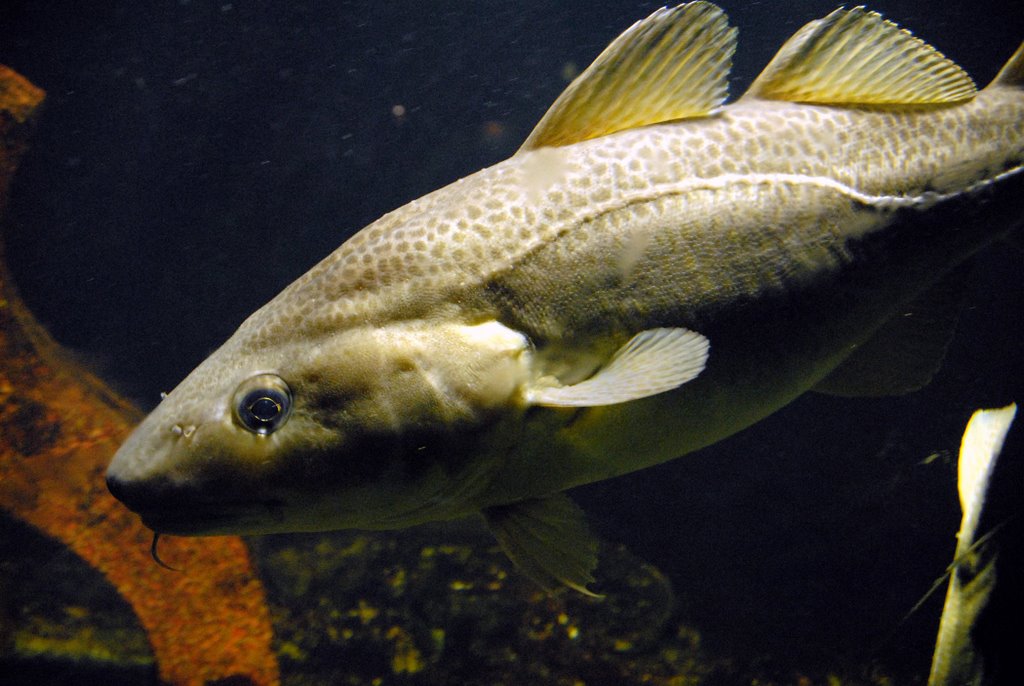
During the summer of 2000, I entered a fishing derby sponsored by a local marine supplier and won second prize with this 32 pound codfish caught off Bread and Cheese Islands in Placentia Bay. As we strained on the line, my brother Mike thought that we had hooked into an airplane engine dumped by the Americans when they closed their base in Argentia. All hands helped to land this trophy fish.

Wednesday, November 15, 2006

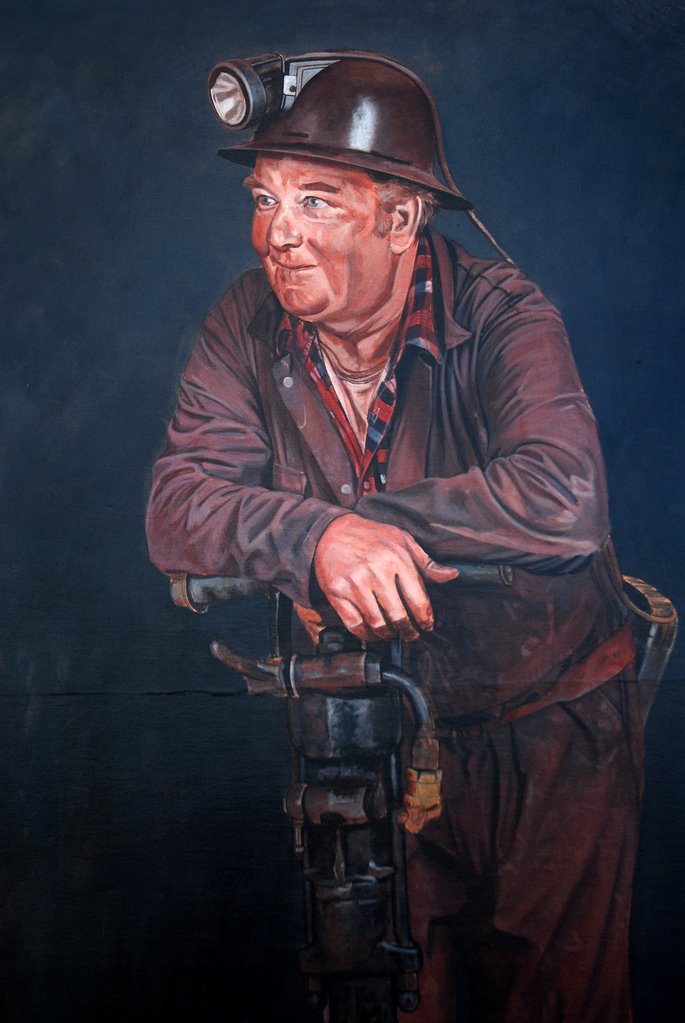
Miner - Bell Island Mural


Bell Island, an island in Conception Bay, was once a thriving mining community; today, the mines are now gone but you can visit giant murals that commemorate the islands proud mining heritage.

Twin Brooks


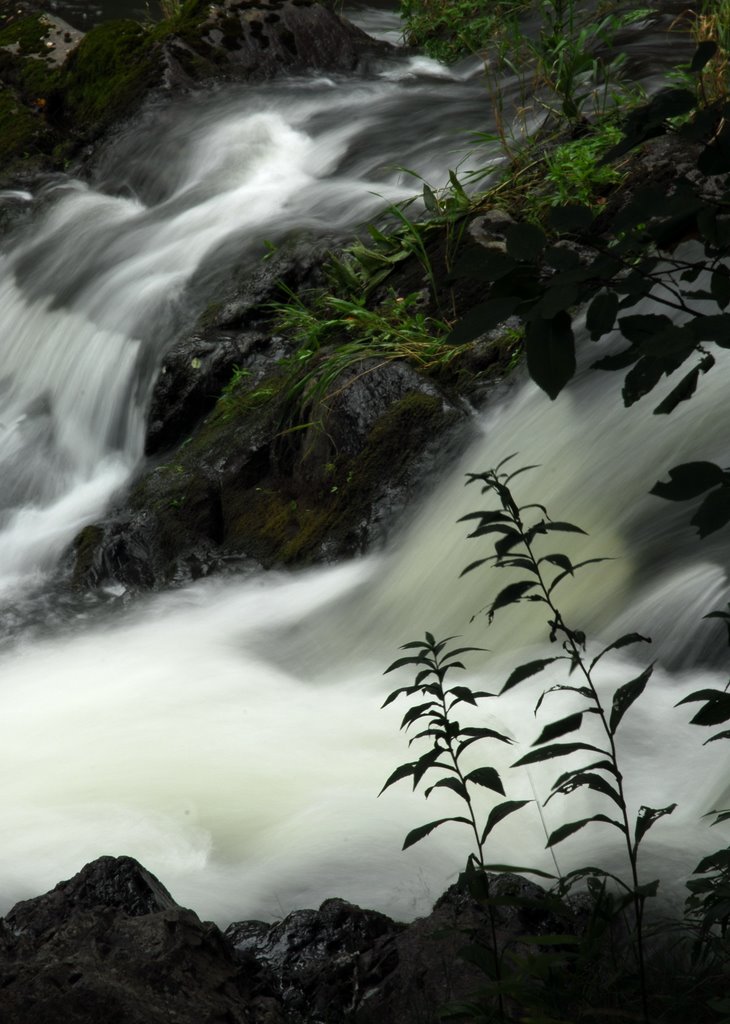
I come from haunts of coot and hern,
I make a sudden sally,
And sparkle out among the fern,
To bicker down a valley.

    By thirty hills I hurry down,
Or slip between the ridges,
By twenty thorps, a little town,
And half a hundred bridges.

Till last by (Lester's) farm I flow
To join the brimming river,
For men may come and men may go,
But I go on for ever.

- Alfred, Lord Tennyson

Saturday, November 11, 2006

Remembrance Day - Nov. 11, 2006


The grave of Private J. Hancock of the Newfoundland Regiment, in Y-Ravine Cemetery, Beaumont Hamel, France. Pte. Hancock was killed in action on the 1st day of the the Battle of the Somme July 1, 1916. He was 18 years old.


On July 1,1916, the Newfoundland Regiment advanced alone into a hail of machine gun fire and suffered a 90 percent casualty rate including every officer - one of the highest casualty rates in the entire British Army that day.

Sunday, November 05, 2006

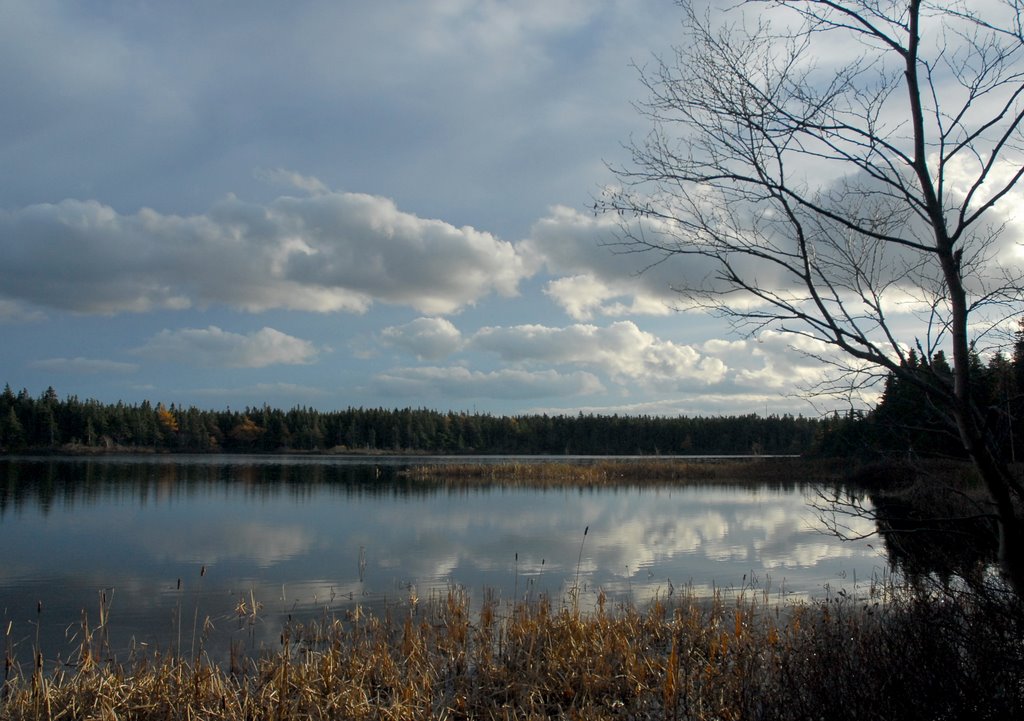
The Lake


" A lake is the landscape's most beautiful and expressive feature. It is earth's eye; looking into which the beholder measures the depth of his own nature. The fluviatile trees next the shore are the slender eyelashes which fringe it, and the wooded hills around are its overhanging brows".
from Walden - Henry David Thoreau

Saturday, November 04, 2006

Fall Colors in Bowring Park


This beautiful park was established in 1911 with a donation of 200 acres to the city of St. John's by the Bowring merchant family. The park has many scenic walking trails along the Waterford River, a swimming pool, tennis courts, picnic areas, and a lawn bowling field. There are several bronze statues including Peter Pan (a replica of the statue in Kensington Gardens in London) and "The Fighting Newfoundlander", a monument commemorating Newfoundland's soldiers.

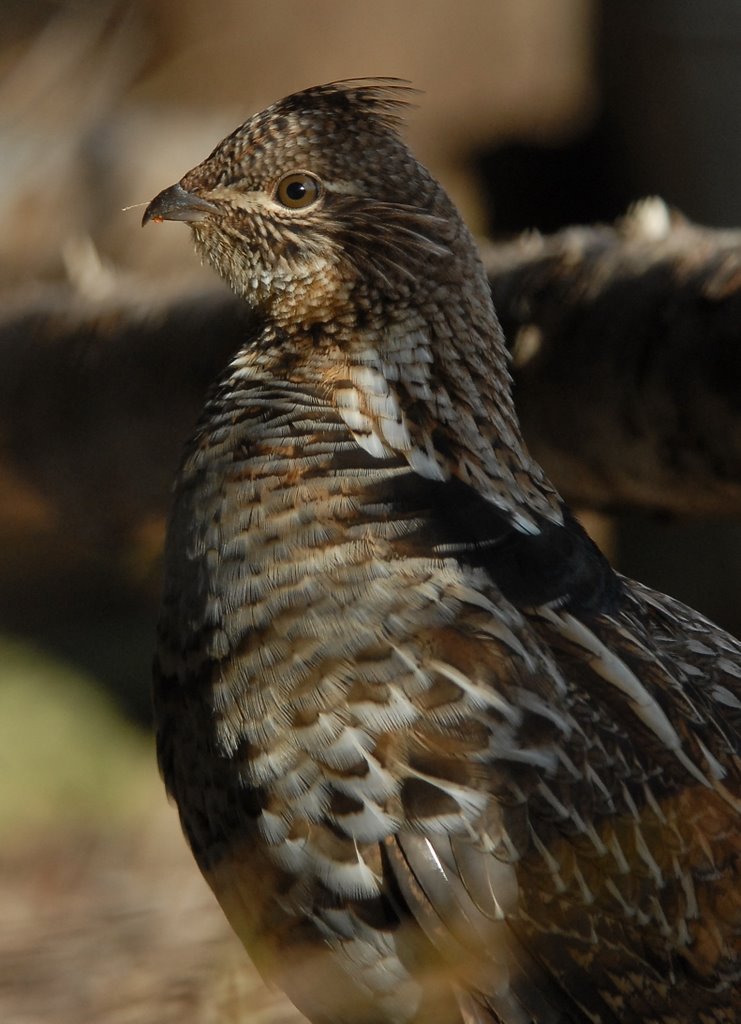
Ruffed Grouse in the Botanical Gardens


While walking through Memorial University's Botanical Gardens today, this grouse began drumming in the shadows of the forest floor.

Tuesday, October 03, 2006

At Torbay Beach


A photographic moment spans fractions of a second. As painters of light we distill our subject from all the world before us. Thus, we create our art.

Monday, October 02, 2006

Torbay Beach Painting


On Sunday afternoon I drove to Torbay but after several pictures I still remained uninspired. I then used a slow shutter speed and set the camera on enhanced mode for one last chance of capturing the seascape. The resulting image showed colors from an artist's canvas and I was pleasantly surprised.


Tangled Bollard


A bollard is a short wooden, iron or stone post used on a quayside for mooring ships. The term may be related to bole, meaning the lower trunk of a tree. Bollards are rarely totally cyclindrical, but typically have a larger diameter near the top to discourage mooring warps (docklines) from coming loose.
- exerpt from Wikipedia


This example, with its confusing mass of rope lines, is shaped like a set of horns - an oversized deck cleat.


Sunday, September 24, 2006

The War at Our Doorstep


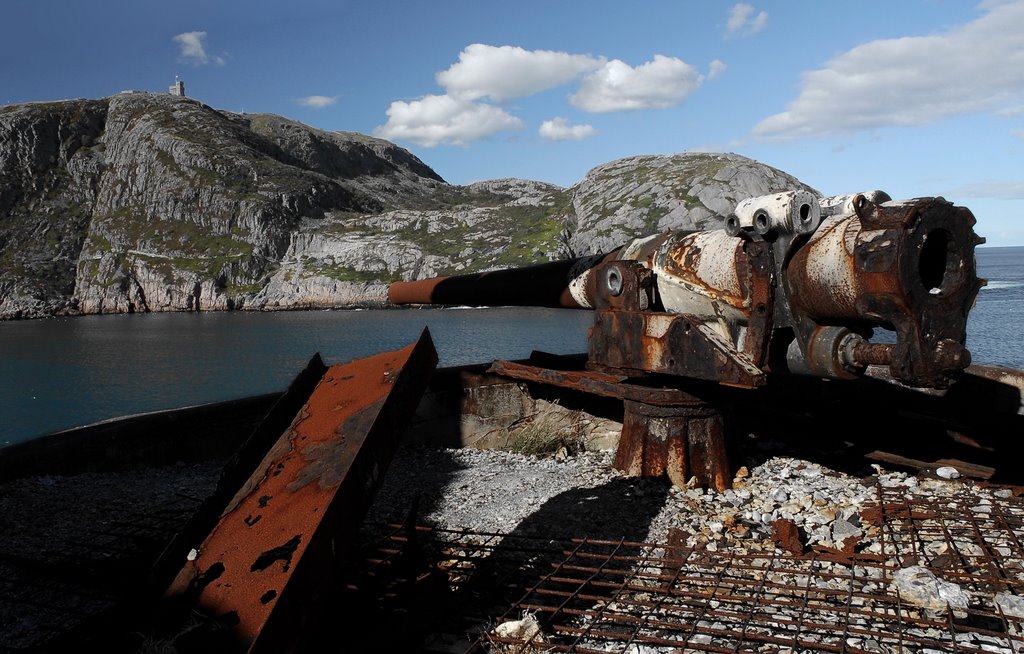
With the outbreak of World War II, St. John's Harbour became an important staging point for convoys and warships crossing the Atlantic to Great Britain. In December 1942, the Canadian government installed two artillery guns below the Fort Amherst Lighthouse at the entrance to the harbour. In 1943, German submarines mined the waters ouside the well protected harbour resulting in the loss of an American freighter and a British ore carrier .

Today, the battery is in ruins but it remains a reminder of how the war touched the residents of St. John's from 1939 to 1945.


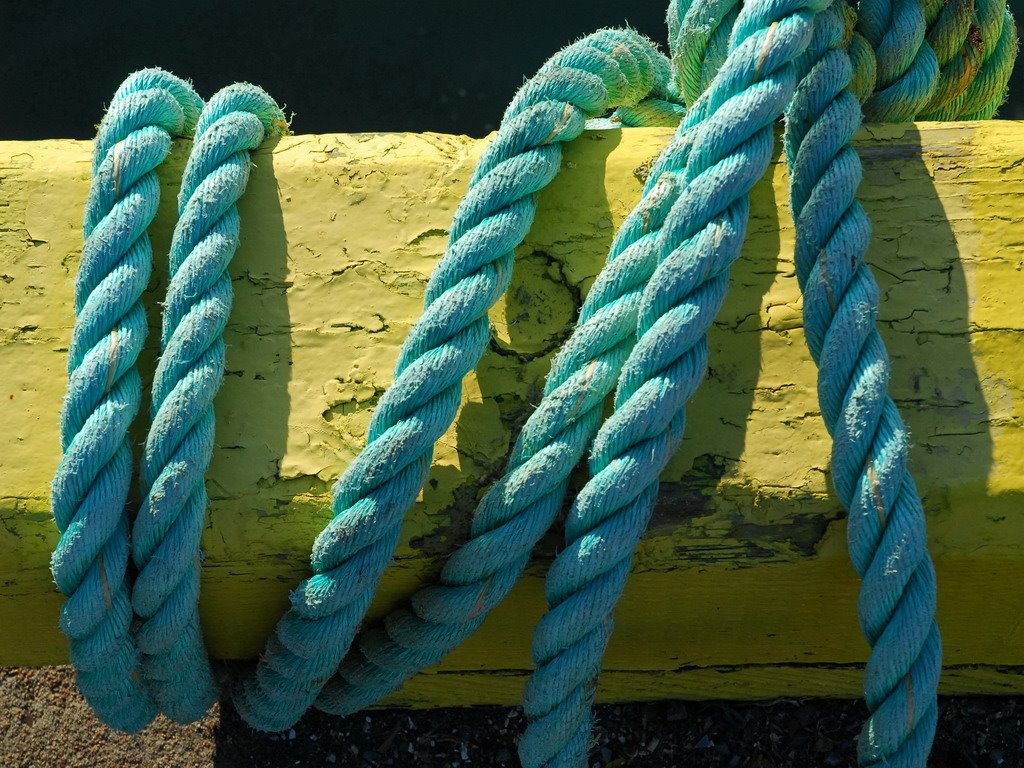
A Kind of Blue - Yellow Day


Frayed blue braids embrace a yellow mooring rail.

Saturday, September 23, 2006

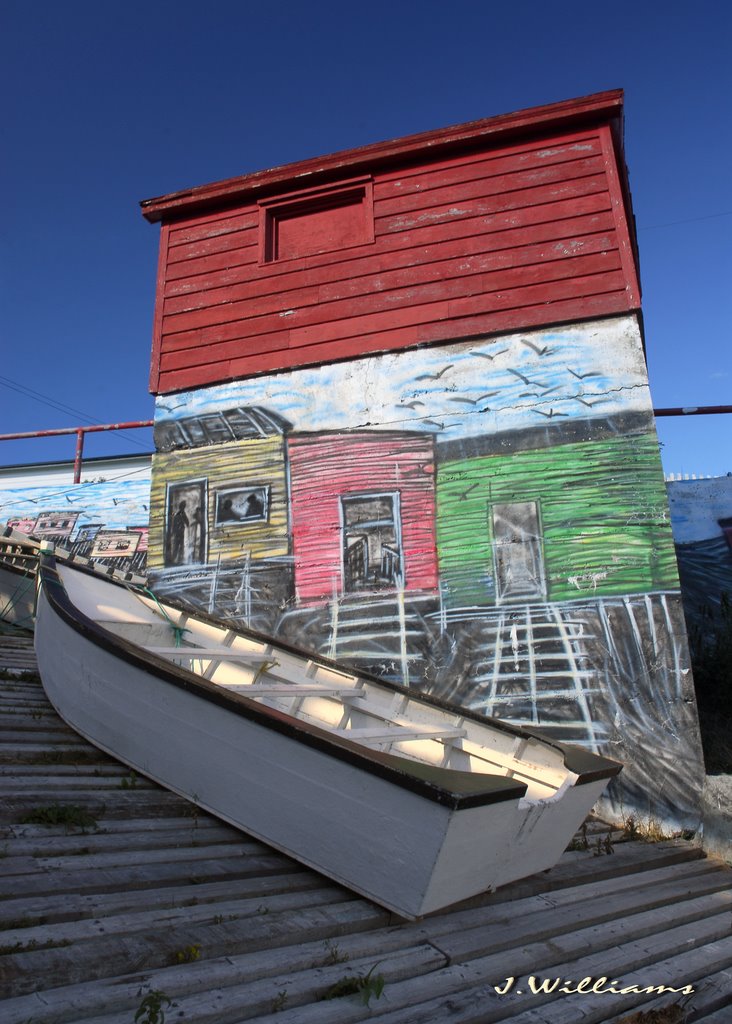
Mural in Pouch Cove on a Friday Afternoon

The Slipway


Yesterday, "Tyler and Lucas" presented a photogenic scene on the the slipway in Pouch Cove.


Friday, September 22, 2006

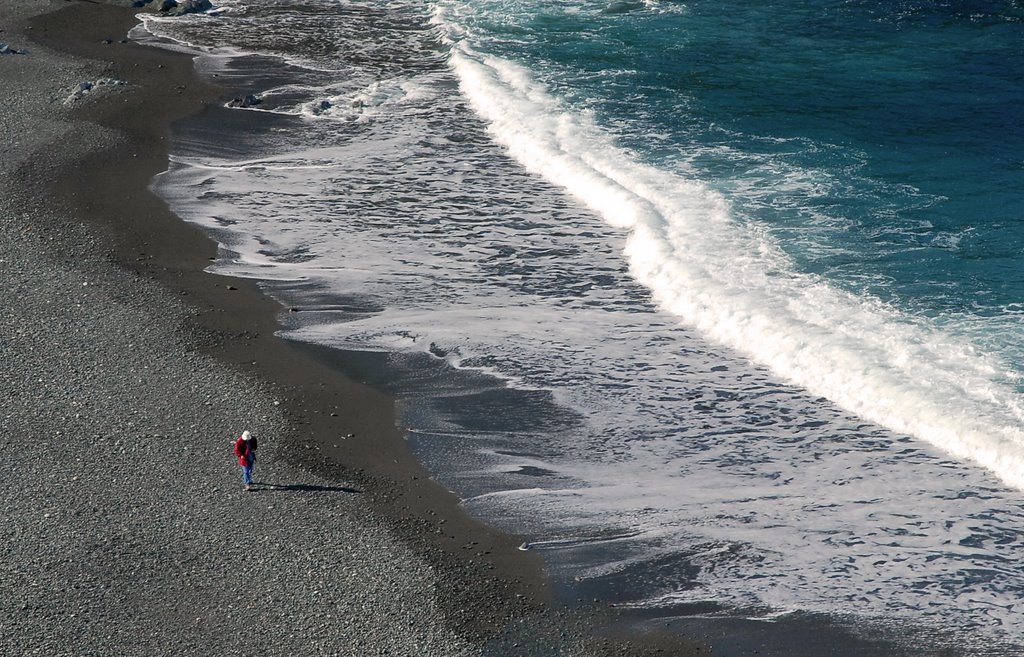
On Middle Cove Beach


Silently, I walk amid the grey dark stones, the sound of wind-lashed waves carrying me to faraway places. I am free at last from the tumult of today.


Monday, September 18, 2006

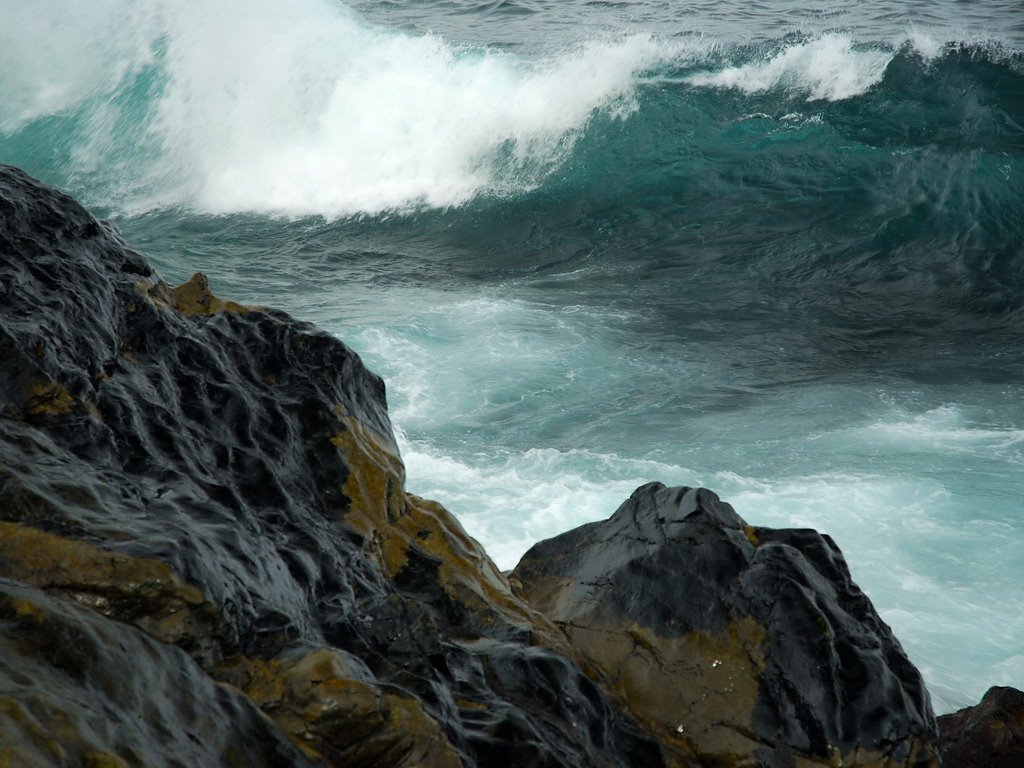
Green Point


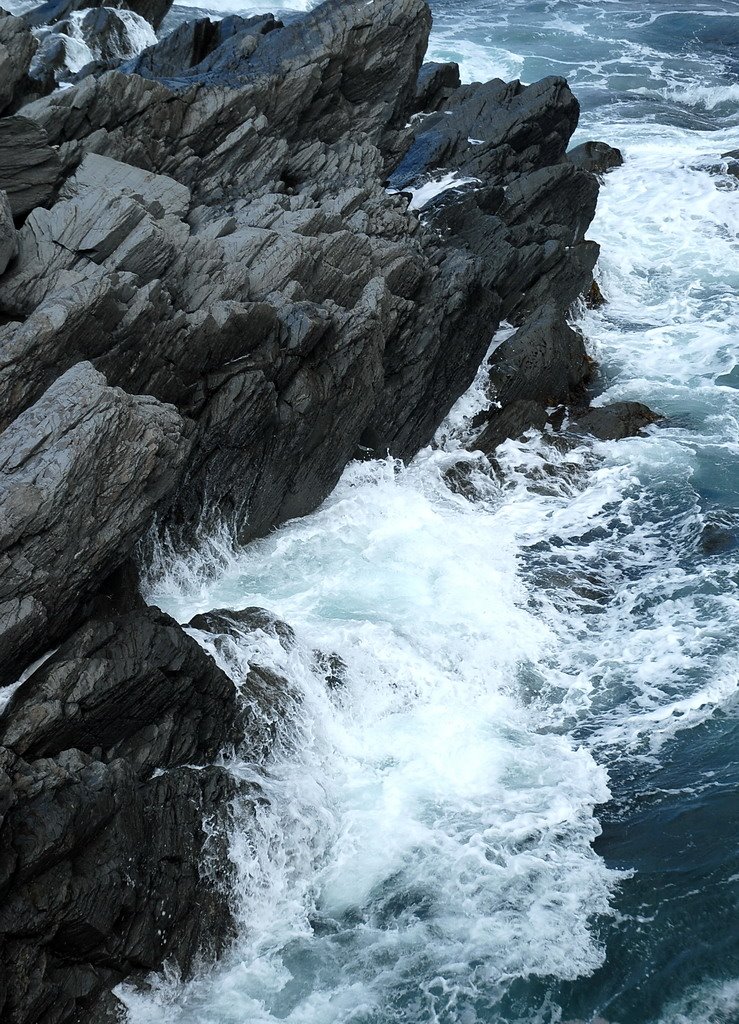
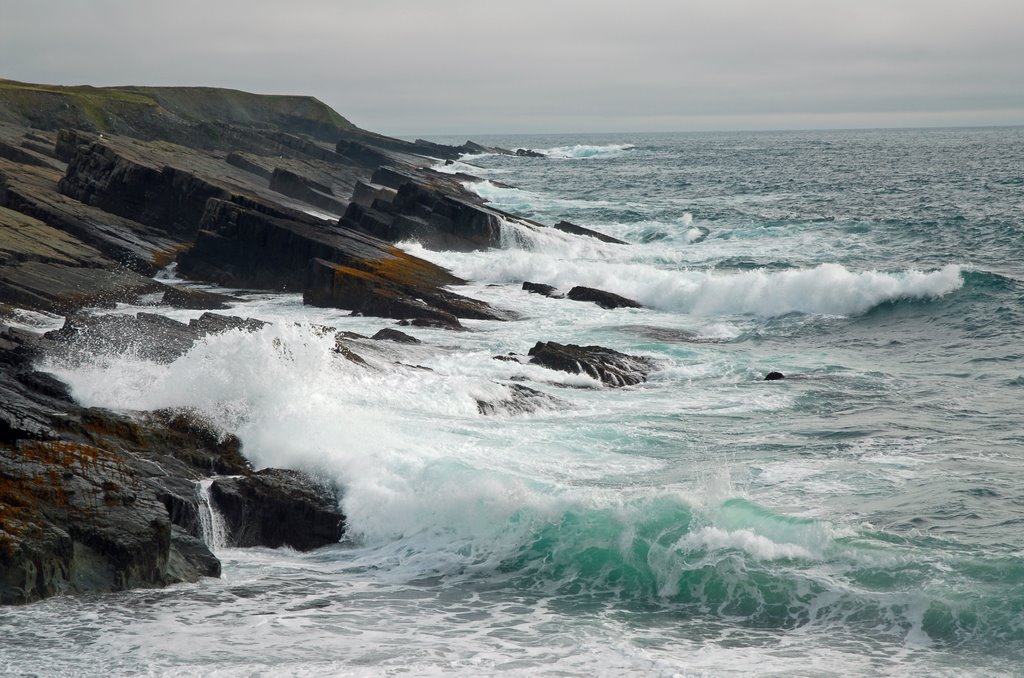
Jagged rocks are washed by the churning sea below the cliffs of Green Point.


Green Point Lighthouse


The Green Point lighthouse is located on a windswept point near the village of Hibb's Cove, Conception Bay. From the community, a rough gravel road leads 1 1/2 miles to the lighthouse. The light tower, built in 1883, is a round cast iron structure with red and white horizontal stripes. Today, its fixed white light remains an active aid to navigation.

In the autumn months, the treeless barrens surrounding this lonely outpost abound in cranberries ripe for picking - just in time for Thanksgiving Day !


Sunday, September 17, 2006

Crab Pots for Sale


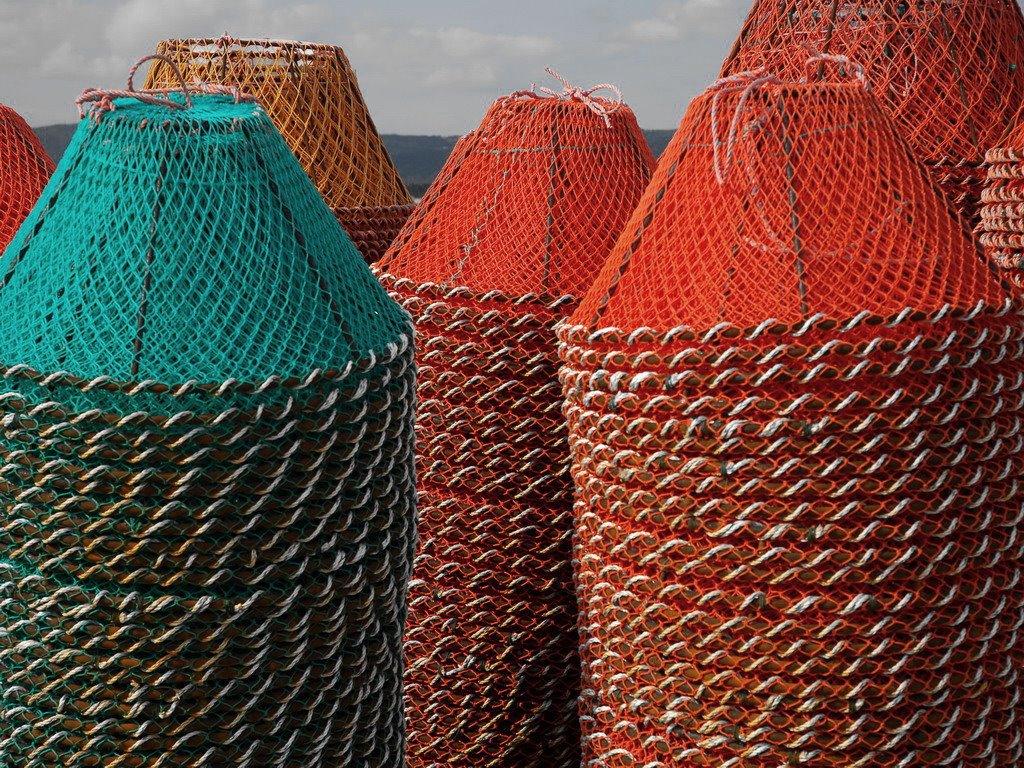
A crab pot is a round rope- knitted cage with a funnel opening and a well in the middle to hold scraps of bait fish. The crab find their way easily in, but they can't get out. The pots are thrown over the side of the boat and are tied to long ropes attached to floats. These colorful pots are still awaiting their new owner in Port de Grave.


Saturday, September 16, 2006

The Lighthouse Keeper - Cape Race


"No circumstance whatever will excuse any lightkeeper for failing to exhibit the lights in his charge at the prescribed time, or for neglecting to keep them burning with the greatest possible brilliancy."

Rules and Instructions for Light Keepers, 1905

Cape Race Panorama


The rocky ledge runs far into the sea.
And on the outer point some miles away,
The Lighthouse lifts its massive masonry,
A piller of fire by night, of cloud by day.

Henry Longfellow - The Lighthouse

Monday, September 11, 2006

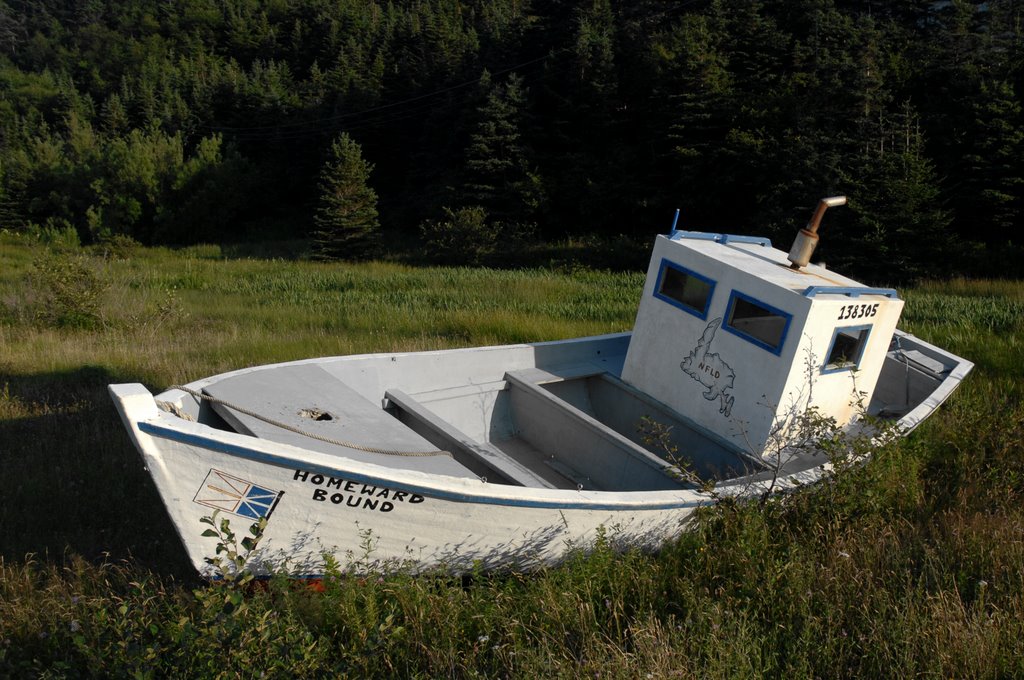
High and Dry


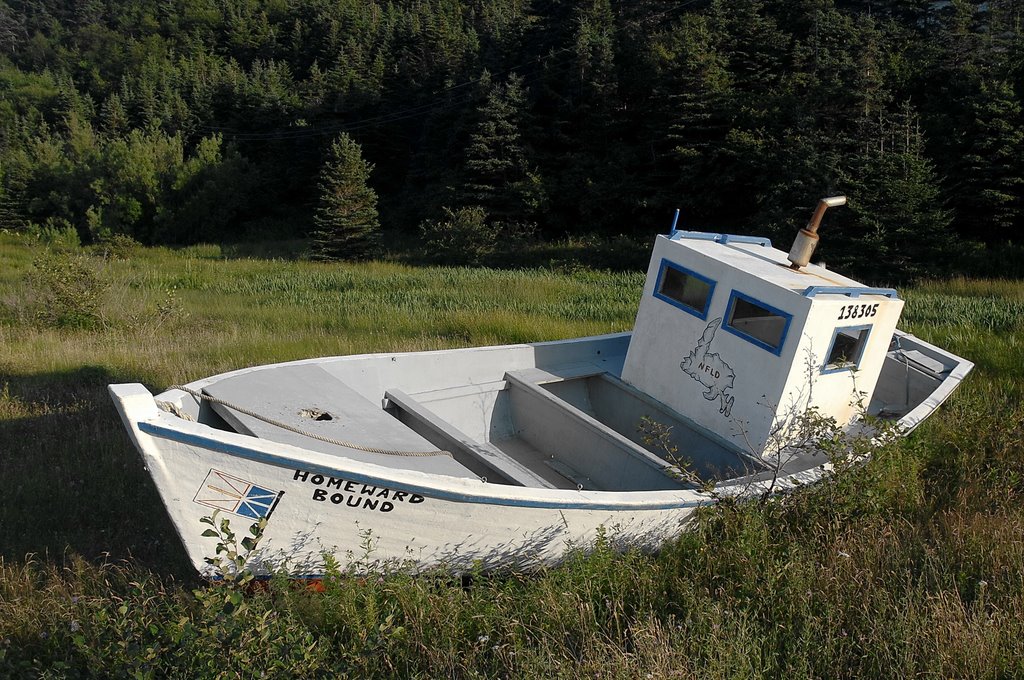
This landlocked boat symbolizes the dream of most expatriot Newfoundlanders - to return again to their beloved island and perhaps never to leave again.

Friday, September 08, 2006

Heart's Content Lighthouse


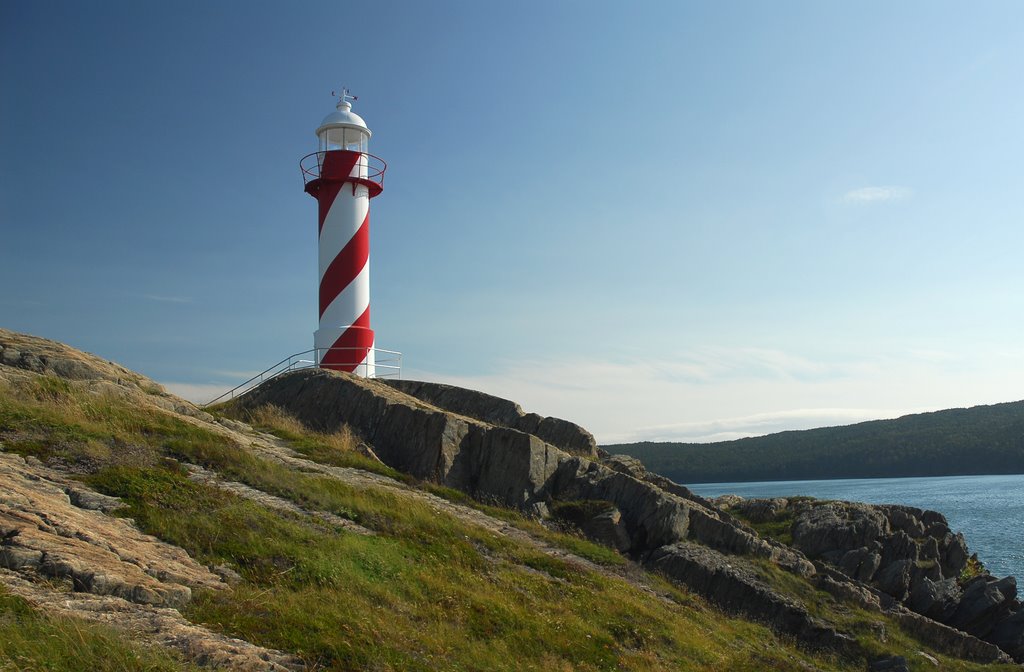
The Heart's Content Light was established in 1901 at the northern entrance of the community harbour. The 3o foot tower is a round cast iron structure painted in a red and white candy cane pattern. The lightkeeper's house and other station buildings have long ago been demolished. Nearby, in the community of Heart' Content,the first Trans-Atlantic cable was landed on July 27th, 1866. A museum, commemorating the role of the town in transatlantic communication brings many visitors in the town.


Thursday, September 07, 2006

Making Fish


This archival photograph is symbolic of the early Newfoundland cod fishery. I made this image from a glass slide in my collection. These fishermen appear to be washing the excess salt from the cod in preparation for curing in the sun. The photo dates to the early 1900's.


Wednesday, September 06, 2006

After the Storm


My soul is full of longing
For the secret of the Sea,
And the heart of the great ocean
Sends a thrilling pulse through me.

-Henry Wadsworth Longfellow


Tuesday, September 05, 2006

Kittiwake ( Tickleace )


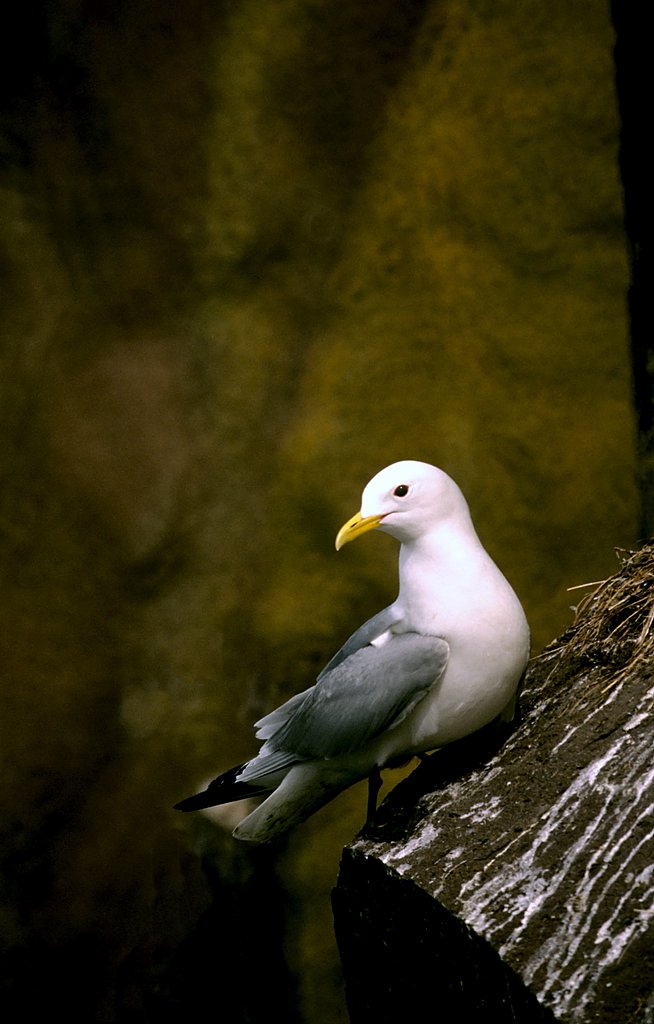
Smaller than a herring gull with wings that appear to have been dipped in black paint, the kittiwake is perfectly at home on the sea, drinking salt water, sleeping on the waves and feeding on small fish. These graceful birds nest in colonies on cliff tops and rocks overlooking the ocean. They rarely frequent land except to nest and they are often seen perched on the tops of icebergs that drift south with the currents to Newfoundland's northeast coast.

 Posted by Picasa

Monday, September 04, 2006

Powell's Head Light Beacon


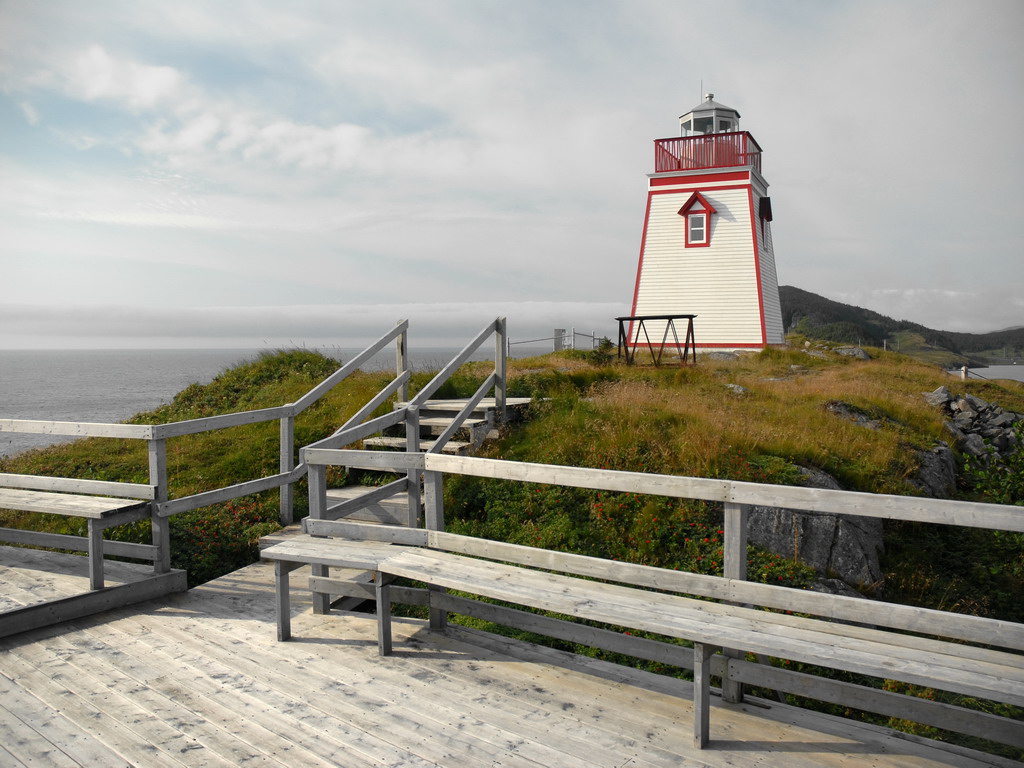
Powell's Head Lighthouse is located near the entrance to Trepassey Harbour. The original iron tower built in 1902 was replaced by this square wooden structure forming one corner of the fog alarm building. Although not as dramatic as older Newfoundland lighthouses, this small lighthouse all painted in white with a red roof and a red octagonal dome lantern does make a pretty picture. It's flashing white light shining from a dioptic lens can be seen for up to 12 nautical miles at sea.

Cape Race Light Station 1909

Cape Race Lighthouse Looking East

Cape Race Lighthouse - Lantern Lens


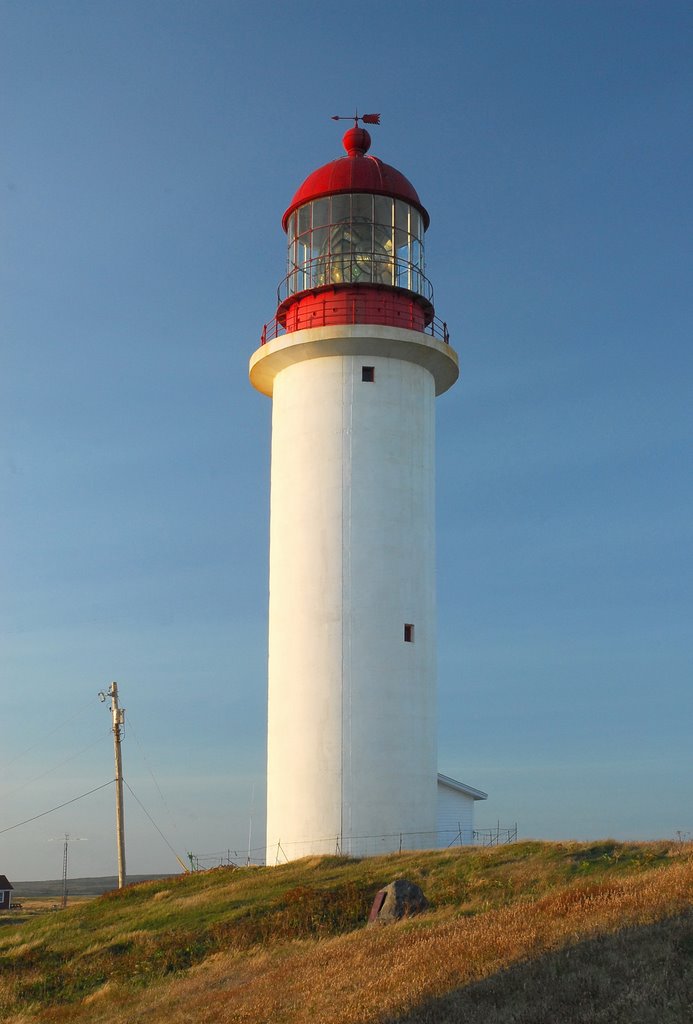
The Cape Race Lighthouse began operating in 1856 and is Canada's most significant landfall beacon. In 1912 radio operators here received the distress signal from the Titanic, which struck an iceberg 400 miles to the southeast. The original light tower was replaced by a white circular concrete tower in 1906. The giant hyper-radial lens, the largest ever built, contains hundreds of prisms that radiate light up to 24 nautical miles. The ocean beneath this beacon is wrought with treacherous currents and razer- sharp reefs and beset with fog, icebergs and storms.

Saturday, September 02, 2006

Water Watchers


"How can there be such solitude in watching water ?"
- Margrethe Ahlschwede


Tuesday, August 29, 2006

Northern Cod


Codfish cakes for breakfast or lunch are an old Newfoundland tradition. They remain one of my favorite dishes.

Here is a recipe:

Codfish Cakes
2 cups salt cod
3 cups peeled, diced potatoes
1 egg, beaten
1/4 teaspoon pepper
Cream

Soak cod overnight. Drain. Pull apart into Flakes or shreds. Boil with potatoes until potatoes are tender. Drain and mash together potatoes and fish. Beat in egg, pepper and a little cream if necessary to make mixture light and fluffy.Pat into cakes and pan fry in hot greased pan, turning once to brown both sides.

Serves 6.

.

Lilies in My Garden


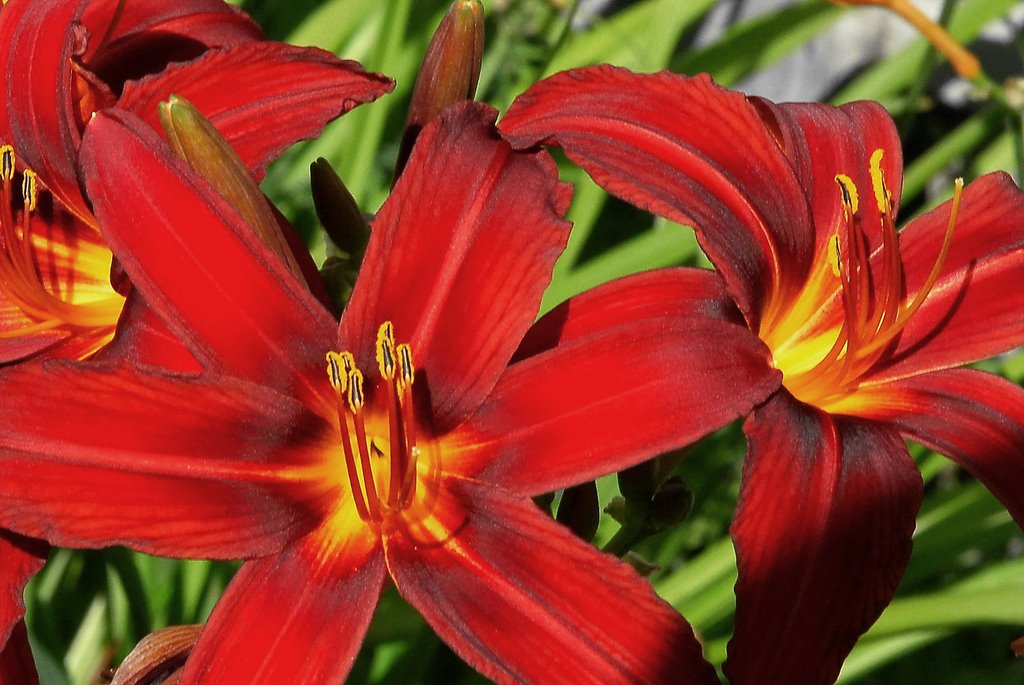
"Lilies have been cultivated for over 3000 years. Feng Shui believers hold the lily as an emblem of summer and abundance; to the Chinese, lily means "Forever in love". The lily was the holy flower of the ancient Assyrians. Until the 16th century the Madonna lily was the only garden variety known, because of this the "lilies of the field" as mentioned in the bible are thought to be this specific lily. A lily has adorned the coat of arms of the kings of France since 1179. King Chlodwig I allegedly received this 'fleur de lys', as it is called in heraldic language, from an angel. " In actual fact, that lily was not a lily but an iris !

Monday, August 28, 2006

Sea-wet Rocks


The mermaids on the sea-wet rocks sat and sang ther siren songs.

Sunday, August 27, 2006

View of Placentia from Fort Royal on Castle Hill


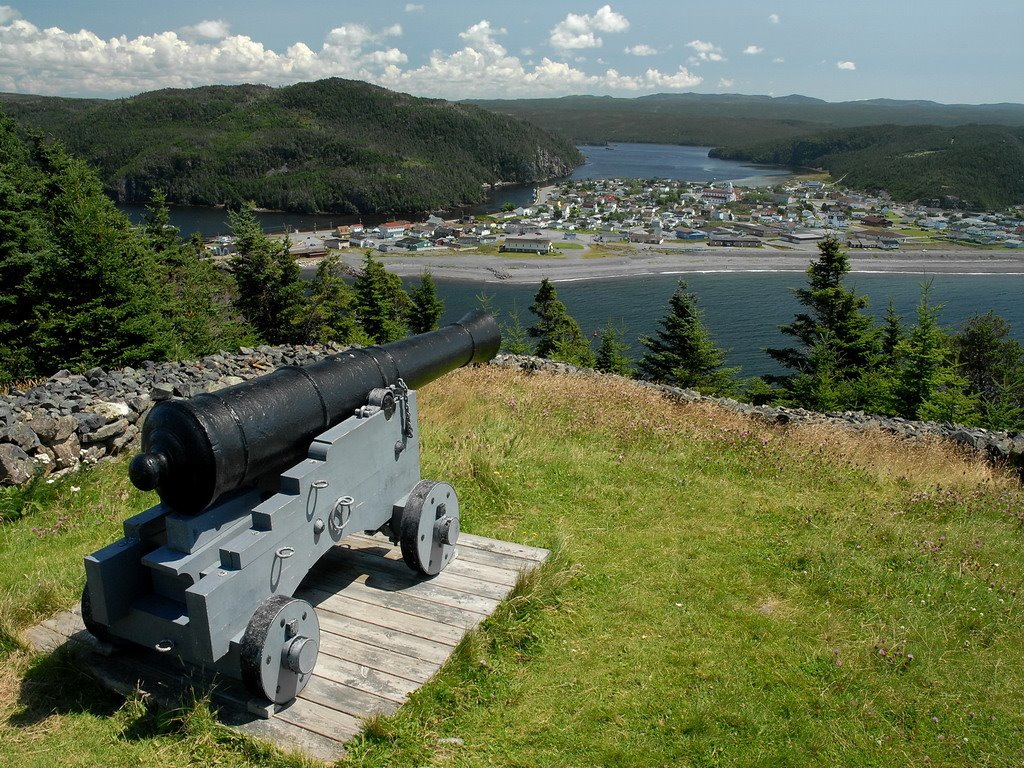
The town of Placentia was once a French fortification and community known as Plaisance. As the French capital of Newfoundland, it was an important base for the French fishery in North America. On Castle Hill, the visitor is greeted by a magnificent view of the present day town and surrounding harbour and can explore the remains of both French and English fortifications from the 17th and 18th centuries.


Saturday, August 26, 2006

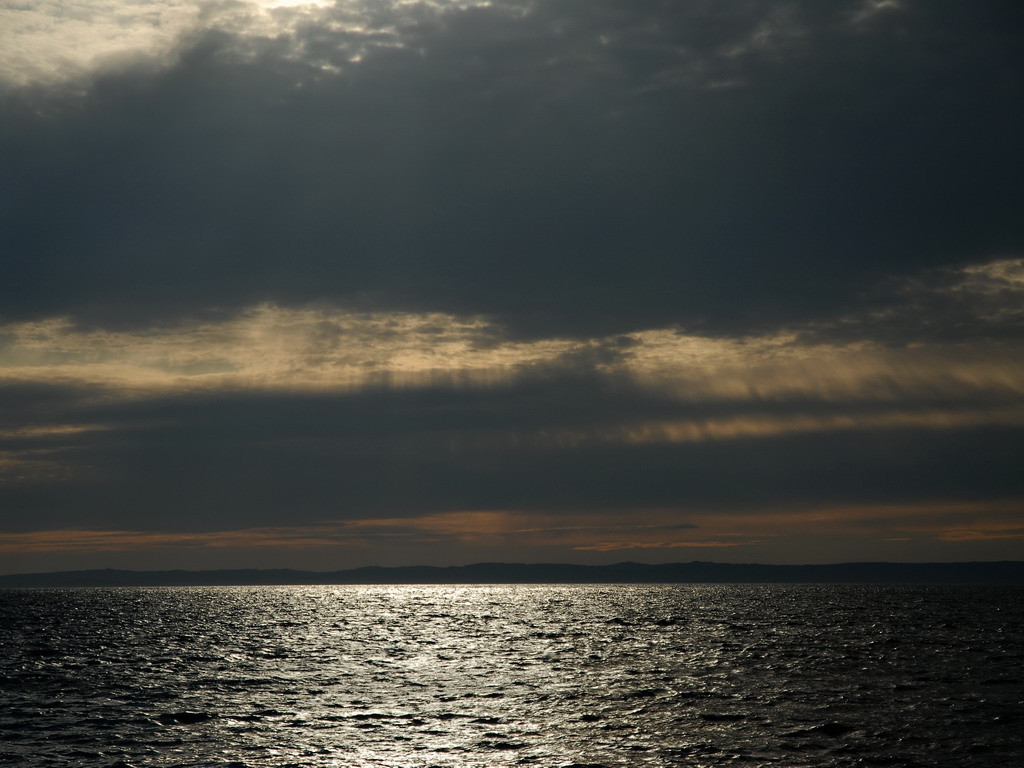
Conception Bay Shore from Bell Island


When we look at the changing evening sky, we must realize that it is the work of someone more powerful than man.

Wednesday, August 23, 2006

Admiral's Point Lighthouse


"A square pyramidal wooden tower flashing white every 5 seconds, range 15 nautical miles."


Admirals Point, Trinity


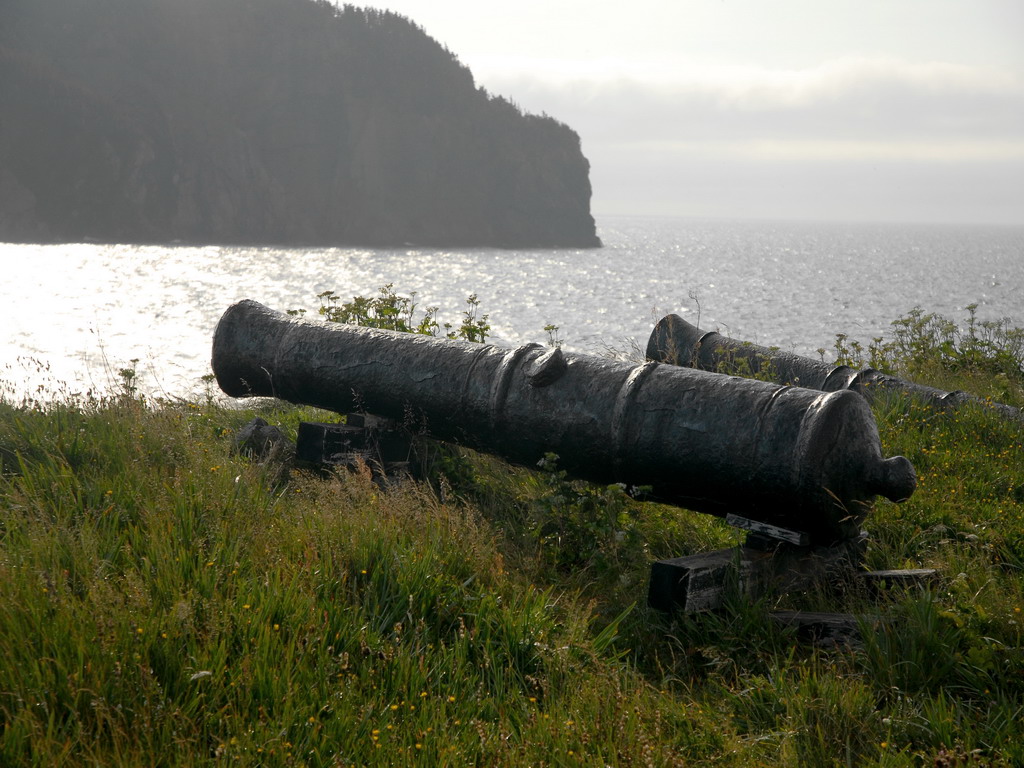
Because of Trinity's excellent harbour and access to the fishing grounds, the early English settlers were subject to French raids. In order to protect their interests, England established a fort on the peninsula that jutted out into the harbour. In 1744, the garrison housed fourteen 24 pounder cannons that protected the inner harbour. The fort was menaced by the French in 1762 and surrendered to the French commander, Captain Chevalier de Boisgelin, who destroyed the fort and and disabled the cannons .

The fort was reestablished in 1812 as protection against American privateers but it was eventually abandoned. Today, only the lonely cannons still guard the approaches to Trinity manned by unseen soldiers.


Friday, August 18, 2006

Moose on Road to Trinity - Who's Watching Who ?


The Newfoundland Moose is often seen along the margins of ponds, lakes and rivers of the boreal forest and bogs. Moose can also be found feeding in fresh water.


Wednesday, August 16, 2006

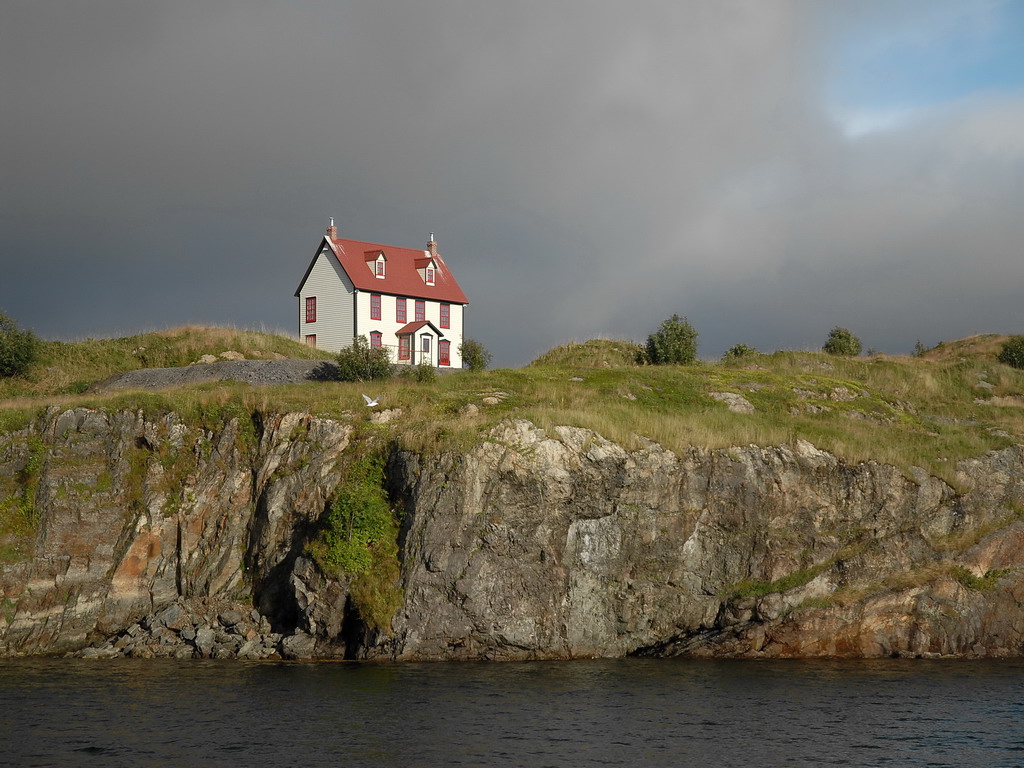
Lonely House in Trinity


Trinity, Newfoundland, is a historic fishing village along the shores of Trinity Bay. Most of the buildings are heritage sites. This elegant house is said to be the oldest house in the community and has recently been rehabilitated by new owners.

"Trinity charms visitors on at least two accounts. Many newcomers are struck by the natural beauty of the area, a magnificent harbour and the splendid maritime setting. Others are touched by a powerful sense of history (Old Worldliness) and the pride of place instilled by the cultural landscape."
- The Story of Trinity -- Gordon Handcock

Tuesday, August 15, 2006

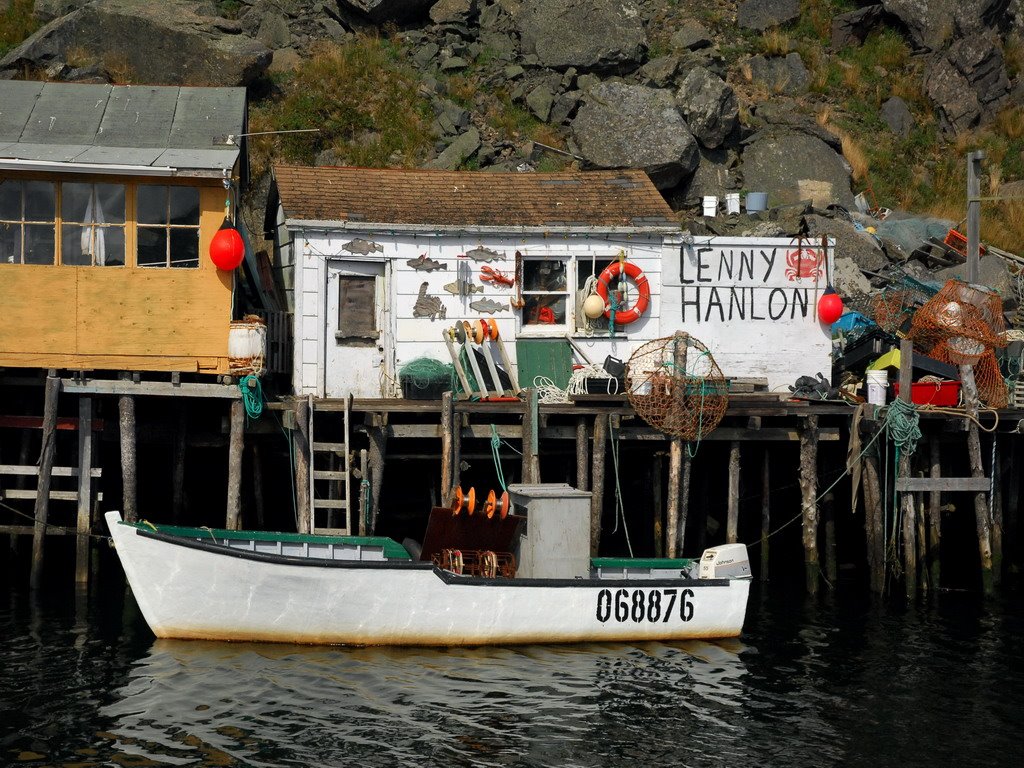
Lenny's Fishing Room

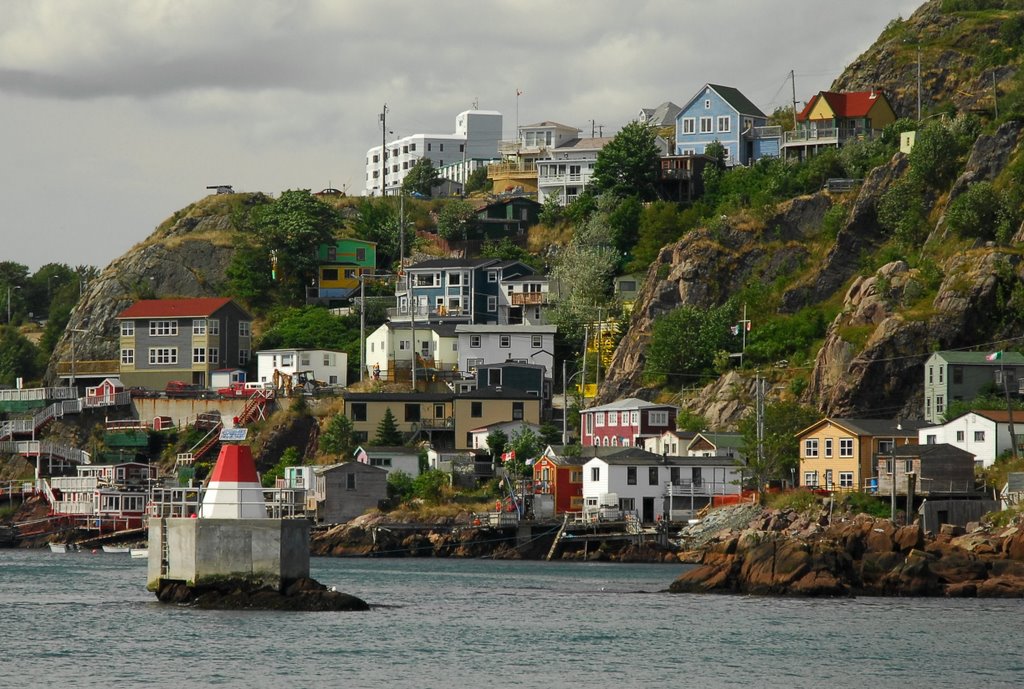
The Battery - A Slightly Different Perspective


The city of St Johns is is the oldest city in North America. While walking along the city waterfront, you will see historic buildings and wonderful whimsical communities such as The Battery. Colorful homes are perched on rockfaces and are literally inches from the road and ocean. Views of the city skyline and Narrows are unfogettable and without equal in this enchanting place.


Sunday, August 13, 2006

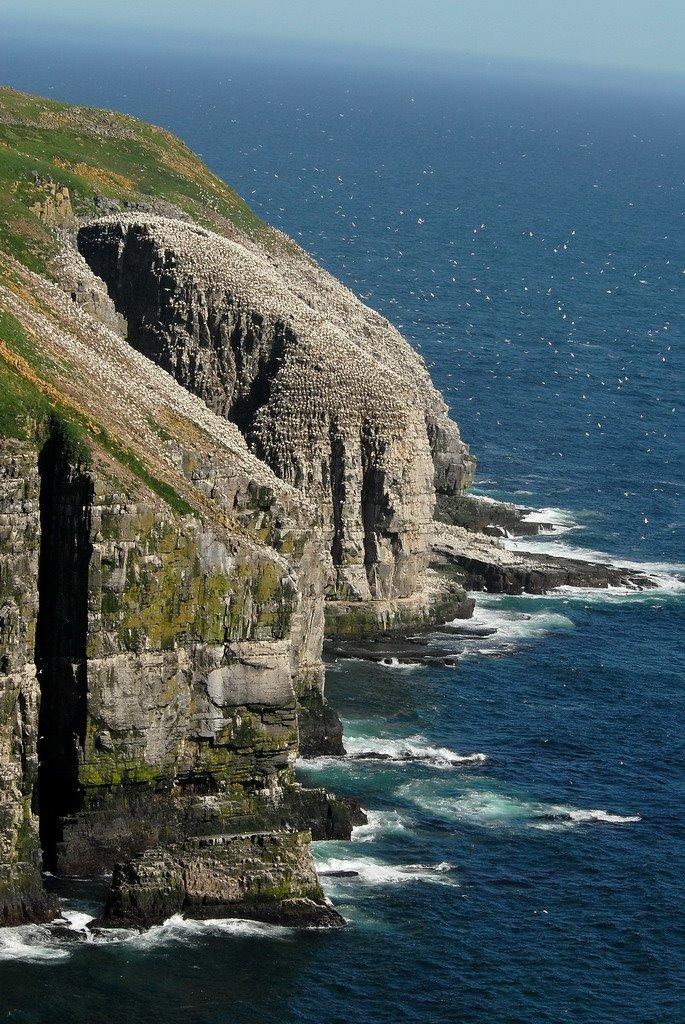
Bird Rock - Cape St. Mary's


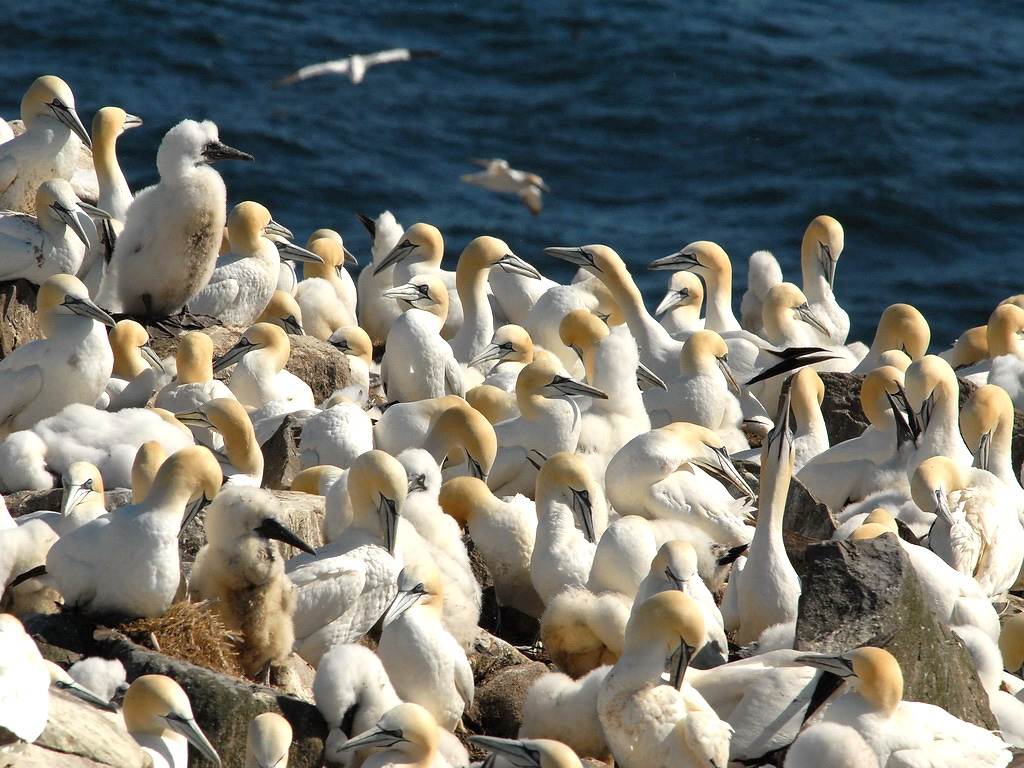
It is an interesting fact that young gannets must launch themselves from these high cliffs and fly immediately. In early fall thousands of anxious juveniles line up along the cliff tops and look down at the great drop before them.

Gannet Colony - Cape St. Mary's


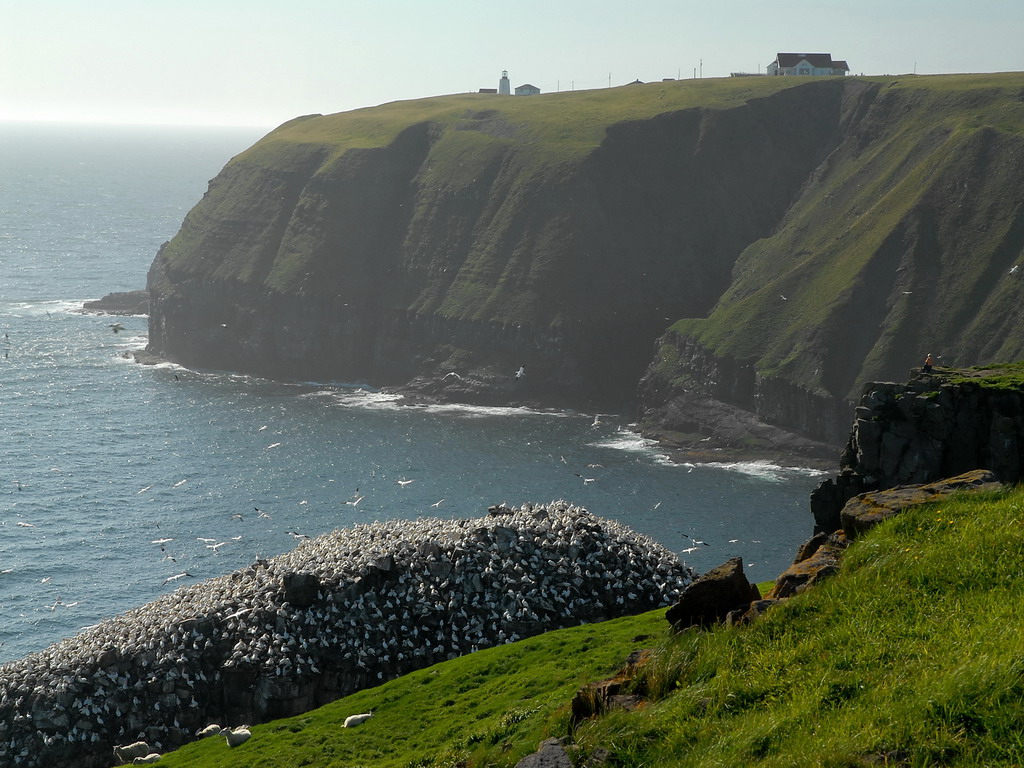
Cape St. Mary has the second largest gannetry in North America, the other being on Bonaventure Island off Quebec. As you can see, it is a spectacular place where you can see thousands of these graceful birds hunting for caplin and other small fish . The top third of Bird Rock is covered with 500 nesting pairs of gannets. The lower cliff face is home to 12,000 pairs of common murres and kittywakes. As you can well imagine, the air is filled with a cacophony of sound. In the distance, you can see Bird Rock Light at the head of the cape.
Take me back to my Western boat.
Let me fish off Cape St, Mary's.
Where the hagdowns sail and the foghorns wail,
With my friends, the Browns and the Clearys.
Let me fish off Cape St. Mary's.


Saturday, August 12, 2006

Moose on the Road to St. Bride's


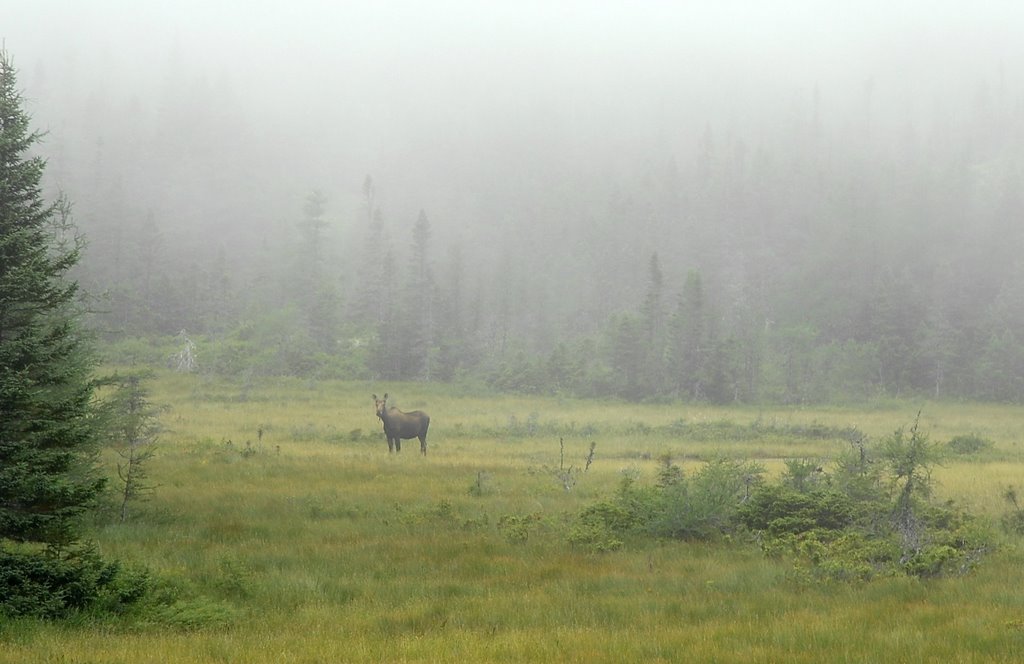
Moose are not native to Newfoundland but were introduced in 1904. Four moose were brought to the island from New Brunswick and today their descendants number about 120,000 . Moose are the largest members of the deer family, standing 7 1/2 feet at the shoulder and bulls can carry 40 pounds of antlers. Their large size in combination with their tendency to wander onto roadways have made them a major hazard for highway drivers especially at dusk and dawn.

I spotted this young cow moose while driving home from a day's outing at Cape St. Mary's and was lucky enough to press the camera shutter just once before she disappeared into the forest.