Saturday, June 23, 2007

Old Capstan Near Rose Blanche


A rusting capstan from another era lends perfect contrast to the young spring ferns.

Rose Blanche Lighthouse - Detail


This light tower is the last remaining granite structure of its type in Canada.

Rose Blanche Lighthouse


The Rose Blanche Lighthouse was built in 1871 from a nearby granite quarry and operated from 1873 to the 1940s. The original light was a 4th order dioptric lit from sunset to sunrise at a height of 95 feet above sea level. It could be seen for 13 miles in clear weather. The building fell into ruins but, in 1988, the citizens of the surrounding communities began restoration and the the lighthouse was returned to its former glory in 1999.


Sunday, June 17, 2007

White Giant


It takes a minimum of 3000 years to produce an iceberg and 3 years to journey to Newfoundland. The berg will melt within a matter of months if not weeks after passing south of St. John's. This white giant is drifting to its destiny off Cape Spear.

Ice Sculpture off Cape Spear


85 % of all the ice bergs that appear off Newfoundland's coast originate from the glaciers of Greenland. These icebergs are the fastest moving bergs in the world at 0.7 km/h.

Sunday, June 10, 2007

Iceberg Radiation Fog


Radiation fog streaming from this iceberg is caused by the warm moist air over the berg being cooled to its saturation point or "dew point".

Bergy Bit - Cuckold's Cove


The International Ice Patrol defines a Bergy Bit as an iceberg 1-4 meters high and 5-14 meters long, weighing 0.1 megatons. This grounded iceberg, the size of a small bungalow, was photographed in Cuckold's Cove.

Saturday, June 09, 2007

Pinnacle Ice Berg - Freshwater Bay


No two ice bergs are the same but they can be catregorized by descriptions of shape and size, such as tabular, blocky, wedge and pinnacle. This is a pinnacle iceberg near St. John's Harbour. When the middle melts out, it becomes known as a dry dock, resembling the docks for repairing ships.

Ice Berg Off Cuckold's Cove


The silence of the early morning air is shattered by a loud bang, followed by an eerie cracking sound that reverberates across the bay. That huge tabular ice berg off Cuckold's Cove has split into two uneven wedges. This spectacle plays out in the spring and early summer off Newfoundland's coasts. About 400 - 800 icebergs survive the trip from Greenland to Newfoundland each year. The 1800 nautical mile trip can take up to three years.


Sunday, May 13, 2007

The Narrows - St. John's Harbour


St. John's Harbour on Mother's Day.


Sunday, April 22, 2007

Butterfly at Bowring Park


Inspired by a group of images taken by Karen whose photography I admire, I ventured to the Bowring Park greenhouse to capture the butterflies brought to St. John's from the Deer Lake Insectarium. Apparently , the entire population of St. John's ( 150,000) had the same idea and we were packed like sardines in a hot tropical environment. I snapped a few shots and fled !

Identification of this beautiful creature would be much appreciated.

Saturday, April 14, 2007

Land' s End - Baja California Peninsula, Mexico


I have just returned from a 23 day vacation in South America and Pacific Mexico and hope to resume posting my Newfoundland images soon. Meanwhile, here is a photo of El Arco, a magnificent natural rock formation at Land’s End in Cabos San Lucas, Mexico at the tip of the Baja California peninsula. Cape Spear on the Avalon Peninsula in Newfoundland has also been called Land's End and has the same rugged beauty.

Sunday, March 11, 2007

Working Lighthouse - Cape Spear


Here is a stylistic winter view of the present operational lighthouse at Cape Spear.


Lonely Sentinel - Cape Spear lighthouse


Cape Spear lighthouse once guarded the most easterly point of North America. Now it stands as a lonely reminder of our maritime heritage on a cold and windswept bluff overlooking the Atlantic Ocean.

Sunday, March 04, 2007

Sunday Blue Jay


A Blue Jay, fat with peanuts, brightens an otherwise drab day in my winter garden.

Thursday, March 01, 2007

Winter Tulips


"The tulips are too excitable, it is winter here.
Look how white everything is, how quiet, how snowed in."

Tulips - Sylvia Plath

Tuesday, February 27, 2007

Cannons at Queen's Battery


On Signal Hill, the last battle of the Seven Years War was fought. Ruins of old forts with their ancient cannon can still be seen.

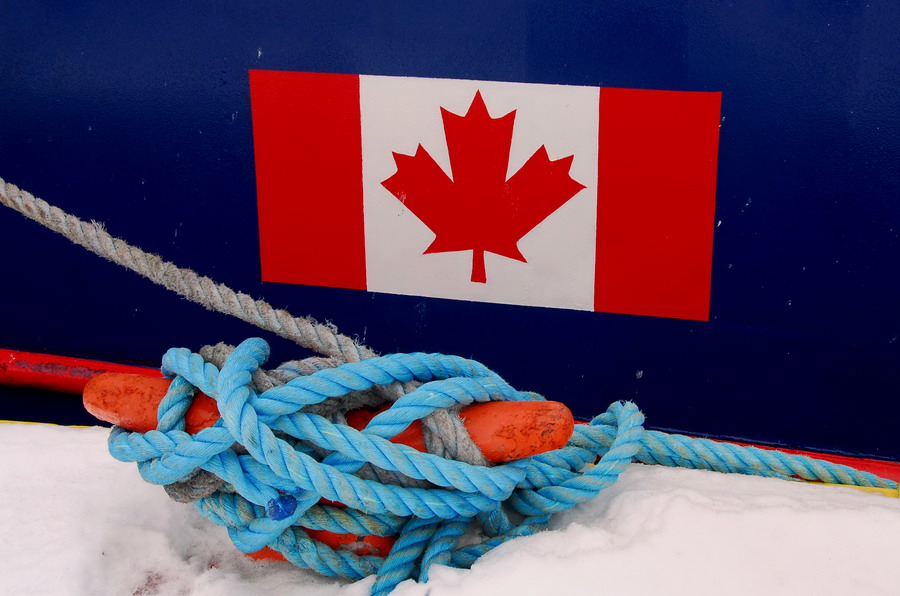
Tied Up at the Wharf


Today I wandered around the Boat Basin on the south side of St. John's Harbour and was attracted by the vibrant "patriotic colors" of the Covenant II.

Sunday, February 25, 2007

Queen's Battery Barracks - Signal Hill


Signal Hill rises above the entrance to St. John's harbour and because of its strategic location it was a natural site for a signal station and fortifications protecting the harbour and the city.
On the lower slopes of the hill, one can visit the the restored Queen's Battery Barracks, a remnant of the Napoleonic period.

Tuesday, February 20, 2007

Greater Scaup


The Greater Scaup is a diving duck that enjoys lakes, bays and ponds. It is often seen on salt water in large rafts often composed of thousands of birds. It is a particulary hardy bird capable of withstanding severe cold and rough weather in winter. This duck appears right at home on Quidi Vidi Lake.

To view a similar species - the Tufted Duck - click "here"

After the Storm


A violent blizzard hit the Avalon Peninsula yesterday accompanied by 110 kilometre an hour winds. All over the city, roads and cars were buried. The storm dumped 40 - 50 centimeters of snow, with drifts reaching the tops of garages and sheds. My driveway received 3 feet of snow plus the snow from the snow plow.

I ventured out early with my snowblower and later my good neighbor, Dave tackled the drifts in his driveway with his vintage Honda snowblower.

Saturday, February 17, 2007

American Coot - Quidi Vidi Lake


The coot is a slaty duck-like bird that prefers fresh water but is sometimes found on salt water inlets and bays. It is a casual visitor to Newfoundland. This particular bird has found friends amongst the myriad other waterfowl at the western end of Quidi Vidi lake.

The expression "silly as a coot" probably originated from the peculiar appearance of the coot with its dark head, white bill and clumsy movements. When swimming it moves its head back and forth like a chicken.

Friday, February 16, 2007

Snow Squall on Quidi Vidi Lake


Visibility was poor for about twenty minutes and suddenly I stood at the very edge of the squall with the sun streaming through the distant trees.

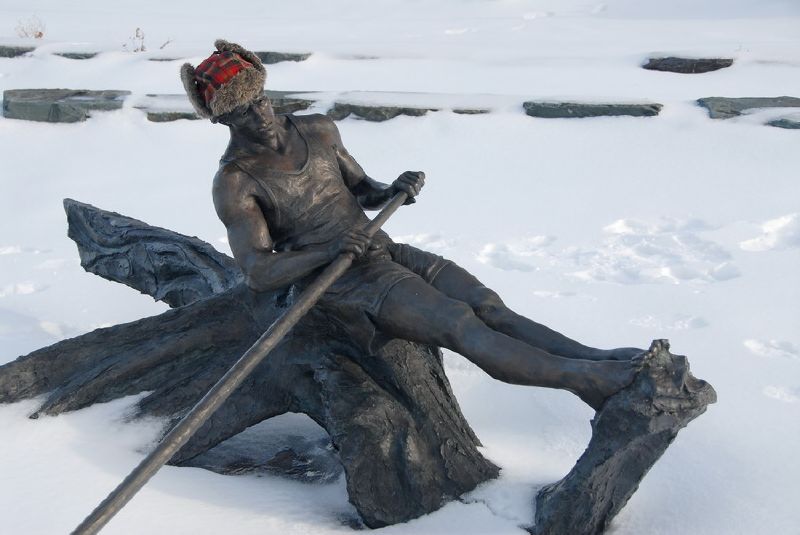
The Rower - Dressed for the Cold


The Rower, Morgan Mac Donald's cast bronze scupture on the shores of Quidi Vidi, sports a hat to shield him from winter's frigid breath.

To see the entire sculpture, click "here"

Evening Over Quidi Vidi


Today I walked around Quidi Vidi Lake and experienced what Newfoundlanders call "weather". One minute the sun shines and another minute I am engulfed in a snow squall. The lake is frozen now but at the inflow of Rennies River the waters are open and gives refuge to hundreds of black ducks, mallards, tufted ducks, pintails, gulls and teal. Quidi Vidi Lake, of course, is the site of the Royal St. John's Regatta in summer - an event that has been held since at least 1826.

Monday, February 12, 2007

Sliding on Saturday


"Gliding, sliding, slipping, tripping
If ice skating's too exhilarating
Try sliding, it's quite exciting."

Sunday, February 11, 2007

Northern Pintail in Winter


This slender white-breasted duck normally flys south for the winter but the plentiful food supply in Bowring Park has tempted several pairs to over-winter along with its neighbours - numerous black ducks and mallards.

Saturday, February 10, 2007

Caribou Memorial in Winter - Bowring Park


The stately bronze Caribou, a tribute to the Royal Newfoundland Regiment stands fast against bitter winds of winter amid the snows of Bowring Park. The Woodland Caribou is the symbol of the Regiment. This breed of caribou lives a solitary life in the forest, unlike the barren-land herds that roam our province.

The Walker


Today, the sun warmed mid winter in Bowring Park to a balmy -4 degrees Celsius thus luring me out of my cosy warm home. It began to snow just as I arrived at the park and I was able to photograph Margaret as she crossed the bridge .

Thursday, February 08, 2007

A & W on a Thursday Afternoon


I dropped into the A&W today for a large Coke and a Chicken Grill. I try to eat healthy but I can't seem to let go of that Coke Classic at 390 calories. I am what is considered a patron of this establishment with it's very friendly staff and of course the daily newspapers. I photographed this image as I left my vehicle in mid-afternoon.

To see another version of this photo click "here"


Wednesday, February 07, 2007

Northern Flicker


The Flicker is the largest woodpecker in Newfoundland and is certainly my favorite visitor to the feeder. It is often quite noisy and commonly perches on a high dead tree druming for insects. This cautious bird will fly away as soon as I step into the garden but I had no problem taking his protrait from the kitchen window.

Monday, February 05, 2007

Rising Tide Theatre


Throughout the summer Rising Tide Theatre's summer company of over 40 theatre professionals produce the "Summer in the Bight" Festival in Historic Trinity. This festival consists of a series of evening and dinner theatre performances that celebrate Newfoundland's rich culture and heritage. The performances are presented in the Rising Tide Arts Centre, a replica of a 17th century fish store.

Sunday, February 04, 2007

Iris - Waiting for Spring


In Greece, Iris has two meanings: that of the goddess Iris and that of “rainbow.” The Greeks say that the goddess Iris leads the souls of women to Heaven over a rainbow bridge."

The Iris is such a beautiful symbol of life and spring awakening that I thought that this image in the depths of winter would renew our hopes of an early spring.

Saturday, January 13, 2007

Newfoundland Dory

The dory was once a common sight around the harbors and coves of Newfoundland. These two man fishing boats were used to fish cod through the 1860's and into the 1960's. The Newfoundland version was a small 15 foot flat-bottomed boat with flaring sides and a sharp bow and stern. This provided a very stable floating platform and its design allowed easy stacking on the deck of a schooner.

Simeon Lowell who came from England to Massachusetts invented the dory in 1793. The name itself probably originated from a Nova Scotia redfish known as the "John Dory Fish". Some Newfoundland fishermen still build this "little Lady of the North Atlantic.

A Snow Plow at Avondale


The Newfoundland Railway is long gone but scattered along the old track bed, communities still strive to conserve derelict railway stations, railcars, and locomotives. This veteran snowplow from the 1950s can be seen at the Avondale Station. The plow is unpowered and would be pushed through the snow by the locomotive.

Still Life


I photographed this colorful display of cut paper by simply turning on my flash. Although not a Newfoundland theme, the colors remind me of a Newfoundland autumn during the colorless months of winter.

Wednesday, January 10, 2007

Safe Harbour


Quiddi Vidi offers a safe refuge from troubled seas.

The Big One That Never Got Away


During the summer of 2000, I entered a fishing derby sponsored by a local marine supplier and won second prize with this 32 pound codfish caught off Bread and Cheese Islands in Placentia Bay. As we strained on the line, my brother Mike thought that we had hooked into an airplane engine dumped by the Americans when they closed their base in Argentia. All hands helped to land this trophy fish.

Wednesday, November 15, 2006

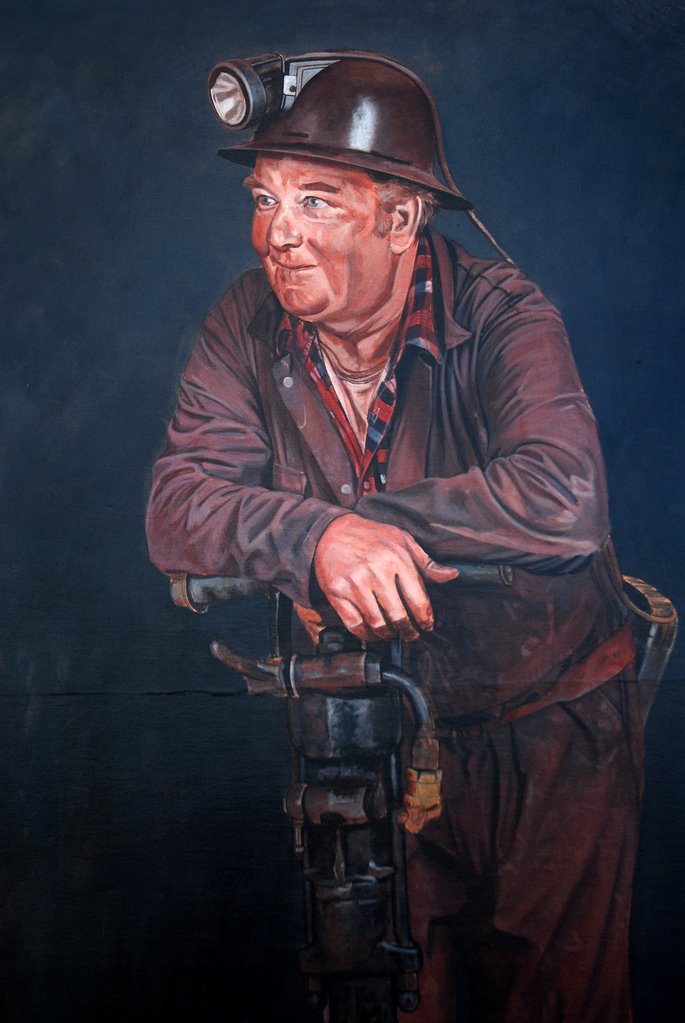
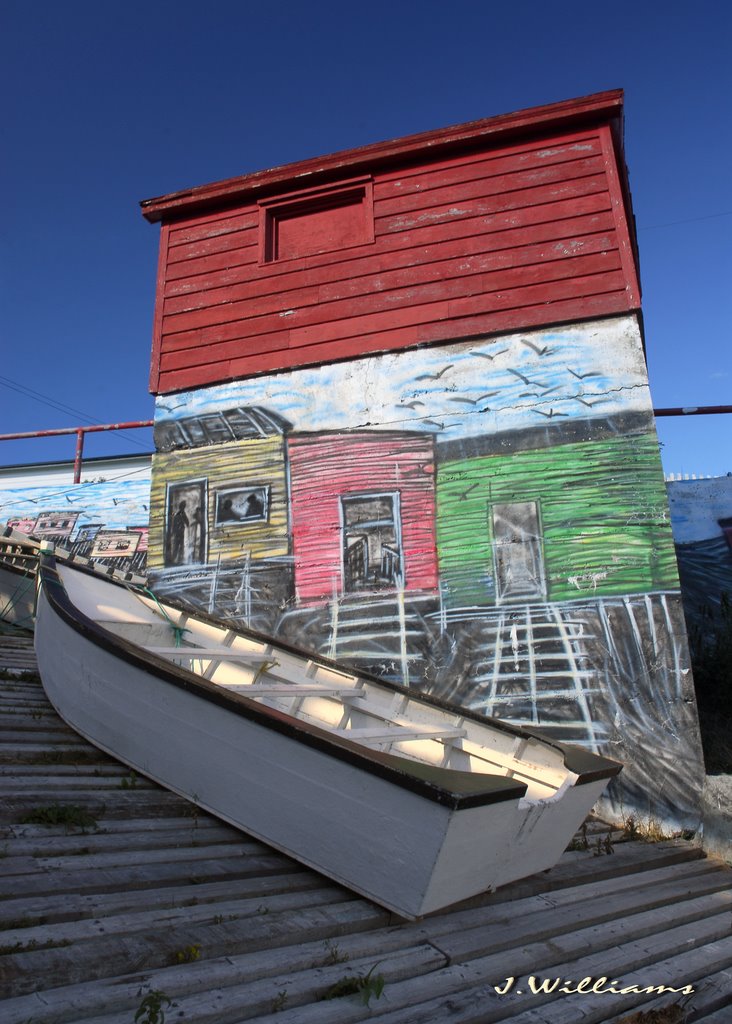
Miner - Bell Island Mural


Bell Island, an island in Conception Bay, was once a thriving mining community; today, the mines are now gone but you can visit giant murals that commemorate the islands proud mining heritage.

Twin Brooks


I come from haunts of coot and hern,
I make a sudden sally,
And sparkle out among the fern,
To bicker down a valley.

    By thirty hills I hurry down,
Or slip between the ridges,
By twenty thorps, a little town,
And half a hundred bridges.

Till last by (Lester's) farm I flow
To join the brimming river,
For men may come and men may go,
But I go on for ever.

- Alfred, Lord Tennyson

Saturday, November 11, 2006

Remembrance Day - Nov. 11, 2006


The grave of Private J. Hancock of the Newfoundland Regiment, in Y-Ravine Cemetery, Beaumont Hamel, France. Pte. Hancock was killed in action on the 1st day of the the Battle of the Somme July 1, 1916. He was 18 years old.


On July 1,1916, the Newfoundland Regiment advanced alone into a hail of machine gun fire and suffered a 90 percent casualty rate including every officer - one of the highest casualty rates in the entire British Army that day.

Sunday, November 05, 2006

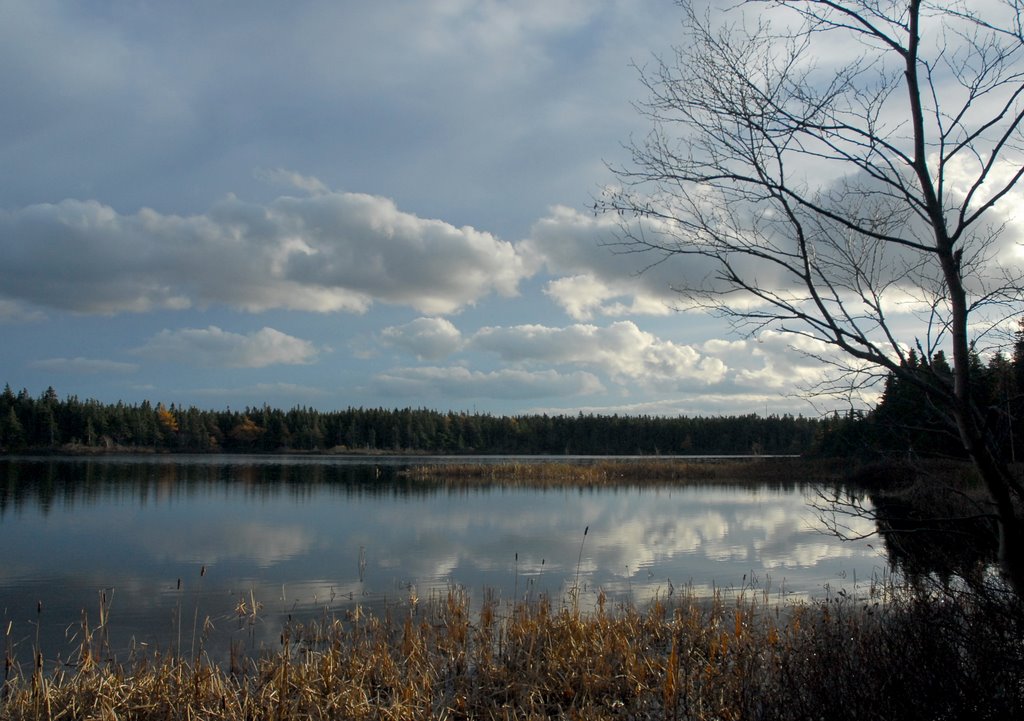
The Lake


" A lake is the landscape's most beautiful and expressive feature. It is earth's eye; looking into which the beholder measures the depth of his own nature. The fluviatile trees next the shore are the slender eyelashes which fringe it, and the wooded hills around are its overhanging brows".
from Walden - Henry David Thoreau

Saturday, November 04, 2006

Fall Colors in Bowring Park


This beautiful park was established in 1911 with a donation of 200 acres to the city of St. John's by the Bowring merchant family. The park has many scenic walking trails along the Waterford River, a swimming pool, tennis courts, picnic areas, and a lawn bowling field. There are several bronze statues including Peter Pan (a replica of the statue in Kensington Gardens in London) and "The Fighting Newfoundlander", a monument commemorating Newfoundland's soldiers.

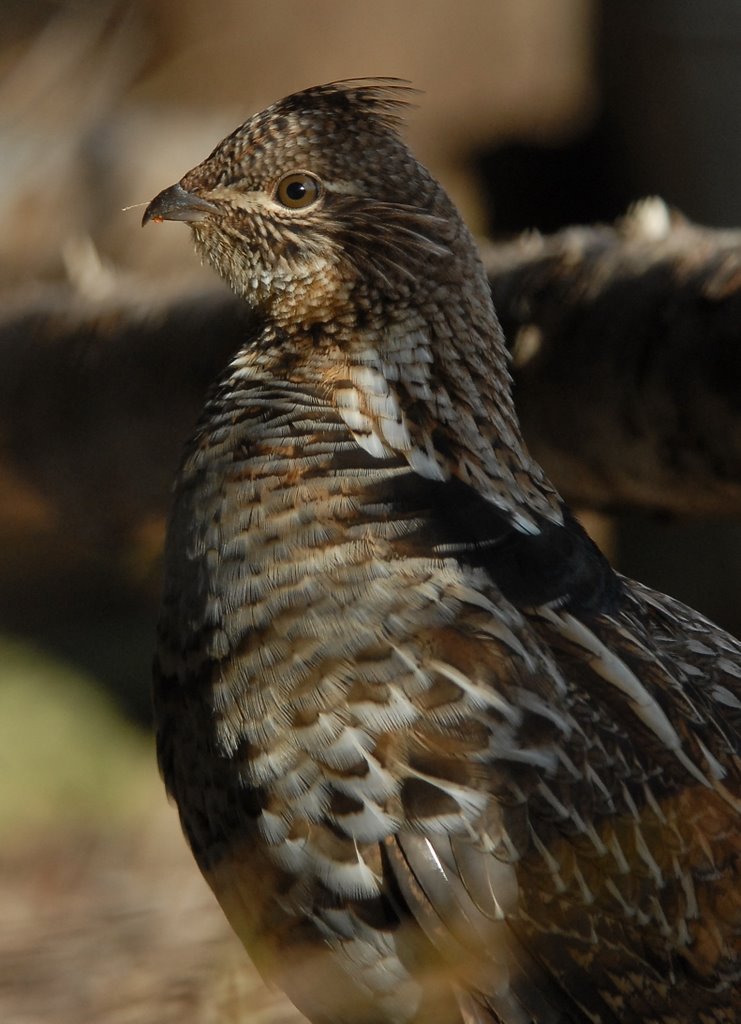
Ruffed Grouse in the Botanical Gardens


While walking through Memorial University's Botanical Gardens today, this grouse began drumming in the shadows of the forest floor.

Tuesday, October 03, 2006

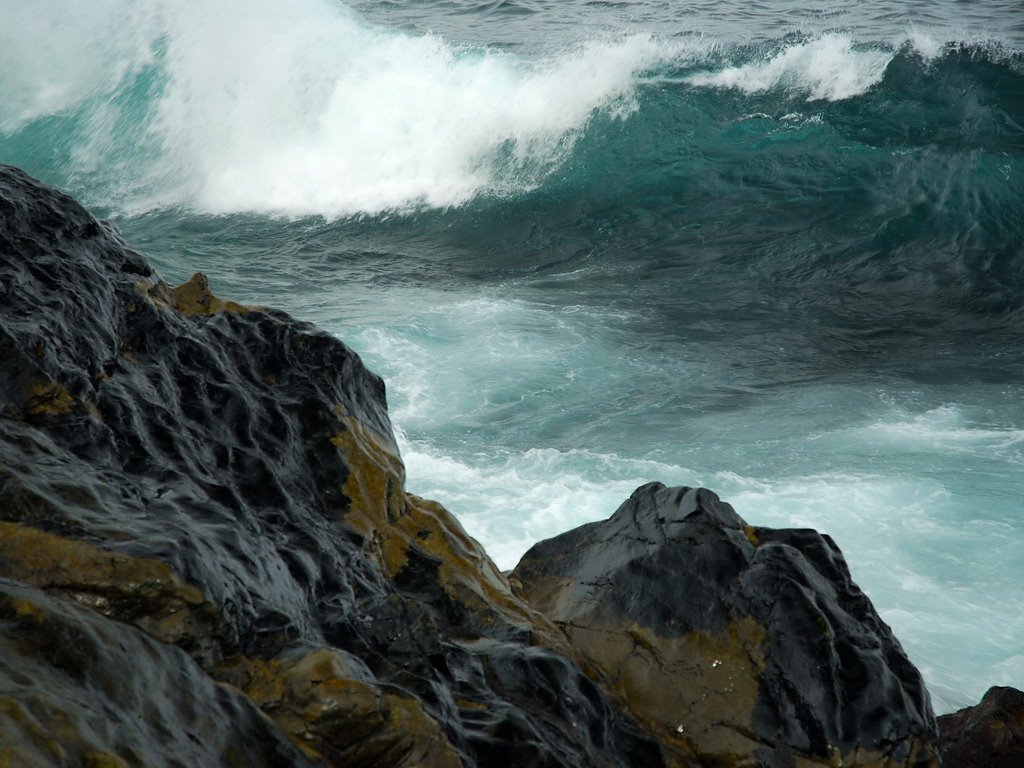
At Torbay Beach


A photographic moment spans fractions of a second. As painters of light we distill our subject from all the world before us. Thus, we create our art.

Monday, October 02, 2006

Torbay Beach Painting


On Sunday afternoon I drove to Torbay but after several pictures I still remained uninspired. I then used a slow shutter speed and set the camera on enhanced mode for one last chance of capturing the seascape. The resulting image showed colors from an artist's canvas and I was pleasantly surprised.


Tangled Bollard


A bollard is a short wooden, iron or stone post used on a quayside for mooring ships. The term may be related to bole, meaning the lower trunk of a tree. Bollards are rarely totally cyclindrical, but typically have a larger diameter near the top to discourage mooring warps (docklines) from coming loose.
- exerpt from Wikipedia


This example, with its confusing mass of rope lines, is shaped like a set of horns - an oversized deck cleat.


Sunday, September 24, 2006

The War at Our Doorstep


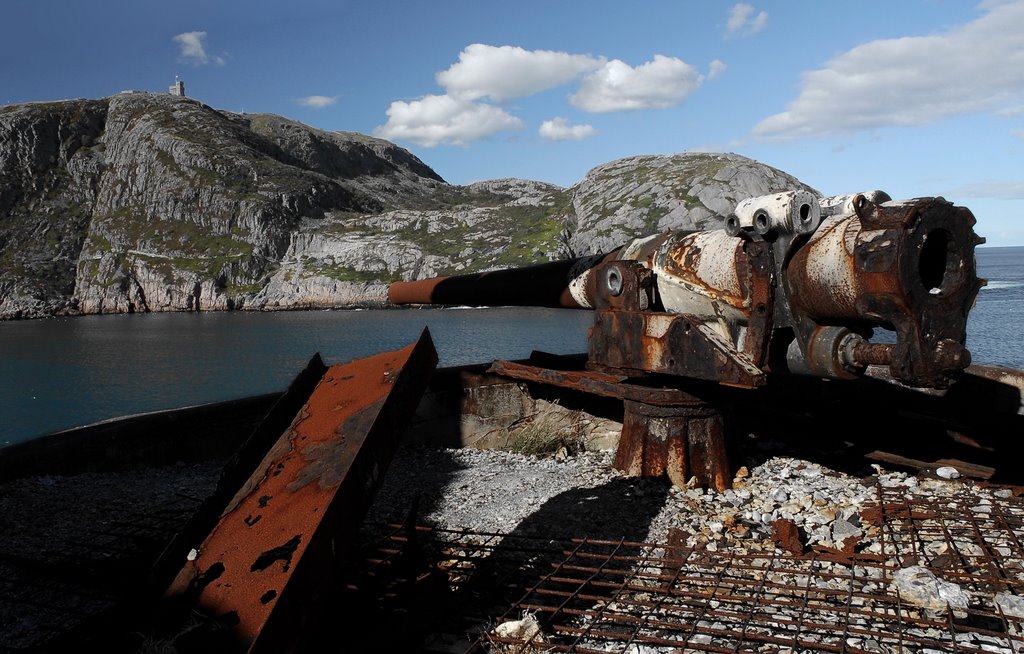
With the outbreak of World War II, St. John's Harbour became an important staging point for convoys and warships crossing the Atlantic to Great Britain. In December 1942, the Canadian government installed two artillery guns below the Fort Amherst Lighthouse at the entrance to the harbour. In 1943, German submarines mined the waters ouside the well protected harbour resulting in the loss of an American freighter and a British ore carrier .

Today, the battery is in ruins but it remains a reminder of how the war touched the residents of St. John's from 1939 to 1945.


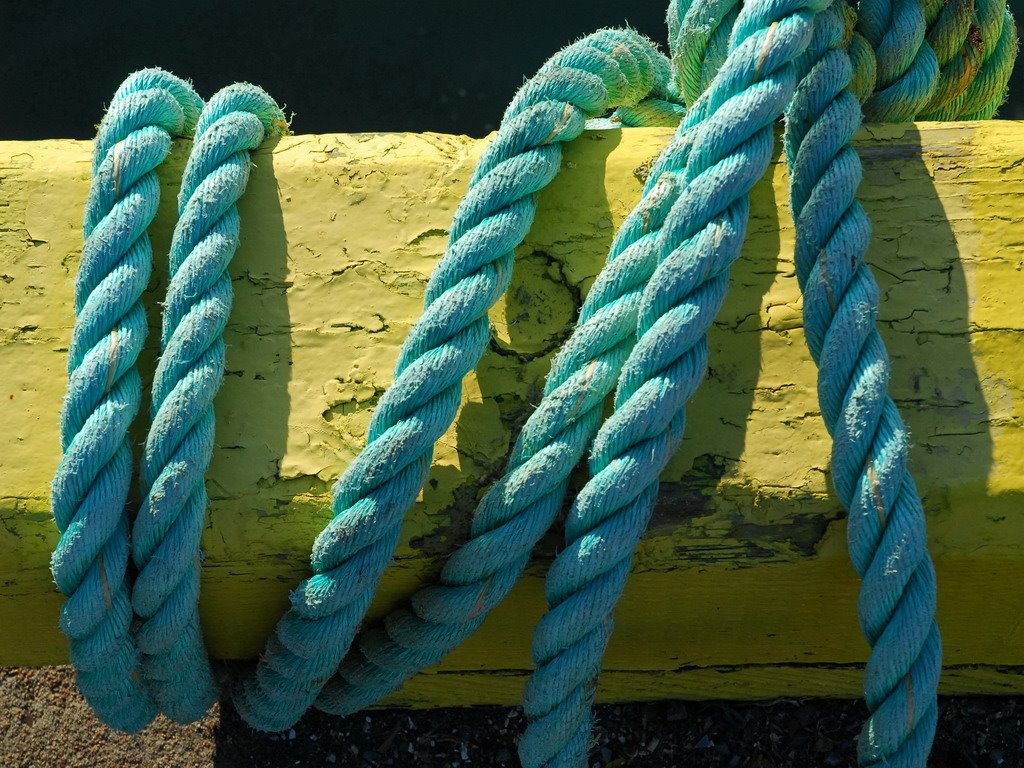
A Kind of Blue - Yellow Day


Frayed blue braids embrace a yellow mooring rail.