Saturday, June 17, 2006

Conception Harbour on a Sunny Day


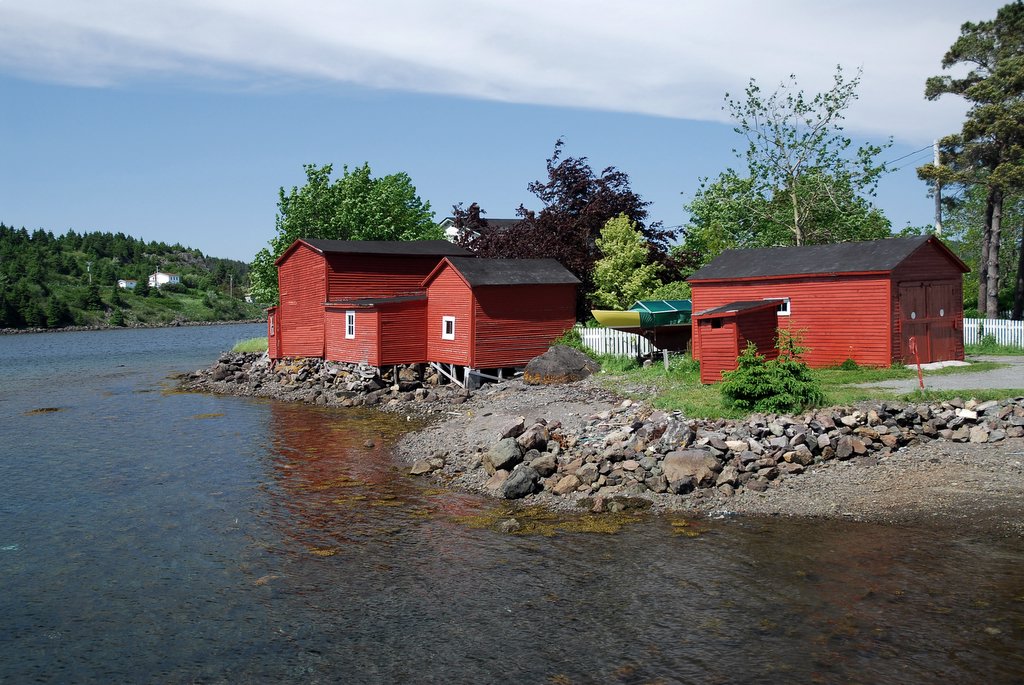
"This collection of buildings forms a rare intact example of the type of structures used in the domestic economy of rural Newfoundland during the 19th and 20th centuries. It includes a house, stable, carriage house/workshop, store, fencing, gate, gardens and rock-lined root cellar that accommodated the agricultural and fishing activities typical of the families in Conception Harbour until the mid-20th century. The property has been in the Trahey family name since before 1800. The dwelling house was constructed circa 1914-1915.

The prominence of the site in Conception Harbour has made this collection of buildings and the adjacent domestic structure a landmark in the community."


from the Newfoundland and Labrador Heritage Web

 Posted by Picasa

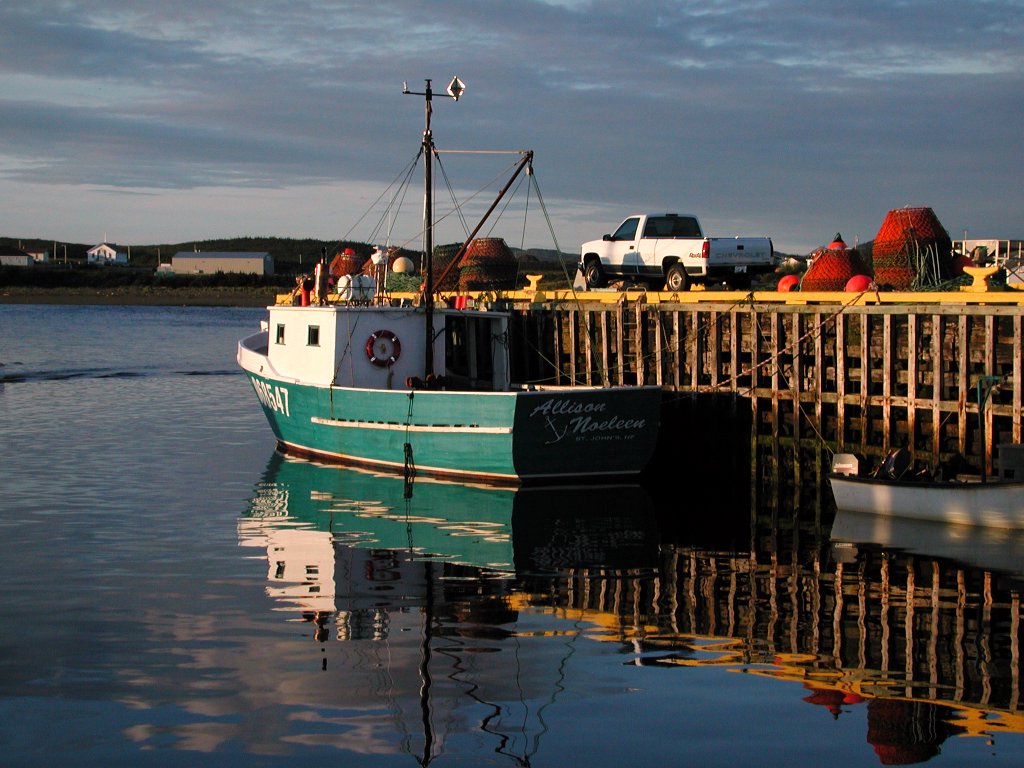
In Need of a Refit


This fishing trawler built in 1967 and moored in Conception Harbour looks like it has seen better times !


Friday, June 16, 2006

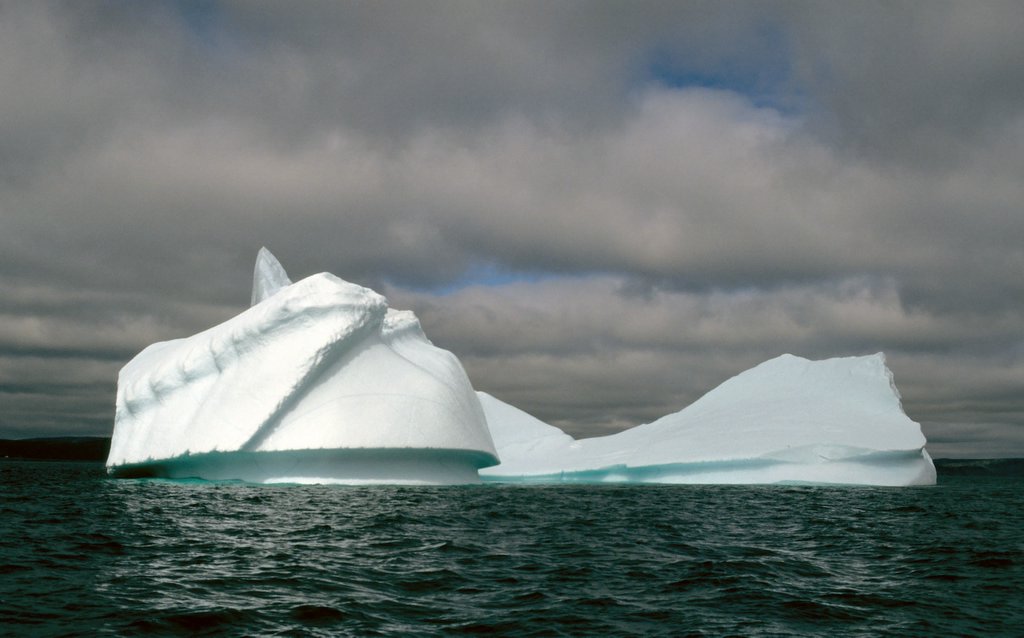
Ice berg Alley


The best place to see icebergs is in Newfoundland and Labrador. These 10,000 year old giants arrive in spring and early summer and are readily seen along our coast. Thousands of these icebergs, calved from the glaciers of Greenland, follow the Labrador Current south to our shores in varying numbers every year. It is an unforgetable experience to see one of these frozen sculptures up close on a warm summers day.

Tuesday, June 13, 2006

Summer Food Fishery


Here's my boat in Arnold's Cove taken at the end of a great fishing trip. My brother,Mike, and his friend are oblivious to the image I'm creating.

NEWS FLASH:
A Summer Recreational fishery has been announced for August 2006 and is expected to last five weeks. "Those taking part in this so-called food fishery will be allowed to land five fish each, and 15 fish per boat under 45 feet in length. Recreational fishermen will no longer need licenses nor tags to catch cod under requirements already in place for other Atlantic provinces."

End of Day - Arnold's Cove


During the occasional summer, the Newfoundland government allows it's citizens to partake in a summer recreational "food fishery". We purchase 15 tags at the local post office and off we go to catch our 15 codfish. On one such venture, after a successful day of fishing in Placentia Bay, I photographed this colorful scene just after we had finished fishing for the day. Incidently, my brother caught a 32 pound cod on this trip and as the "captain", I claimed 2nd prize in a local fishing derby. Such large fish are very rare, but first prize was taken by a 36 pounder !


Monday, June 12, 2006

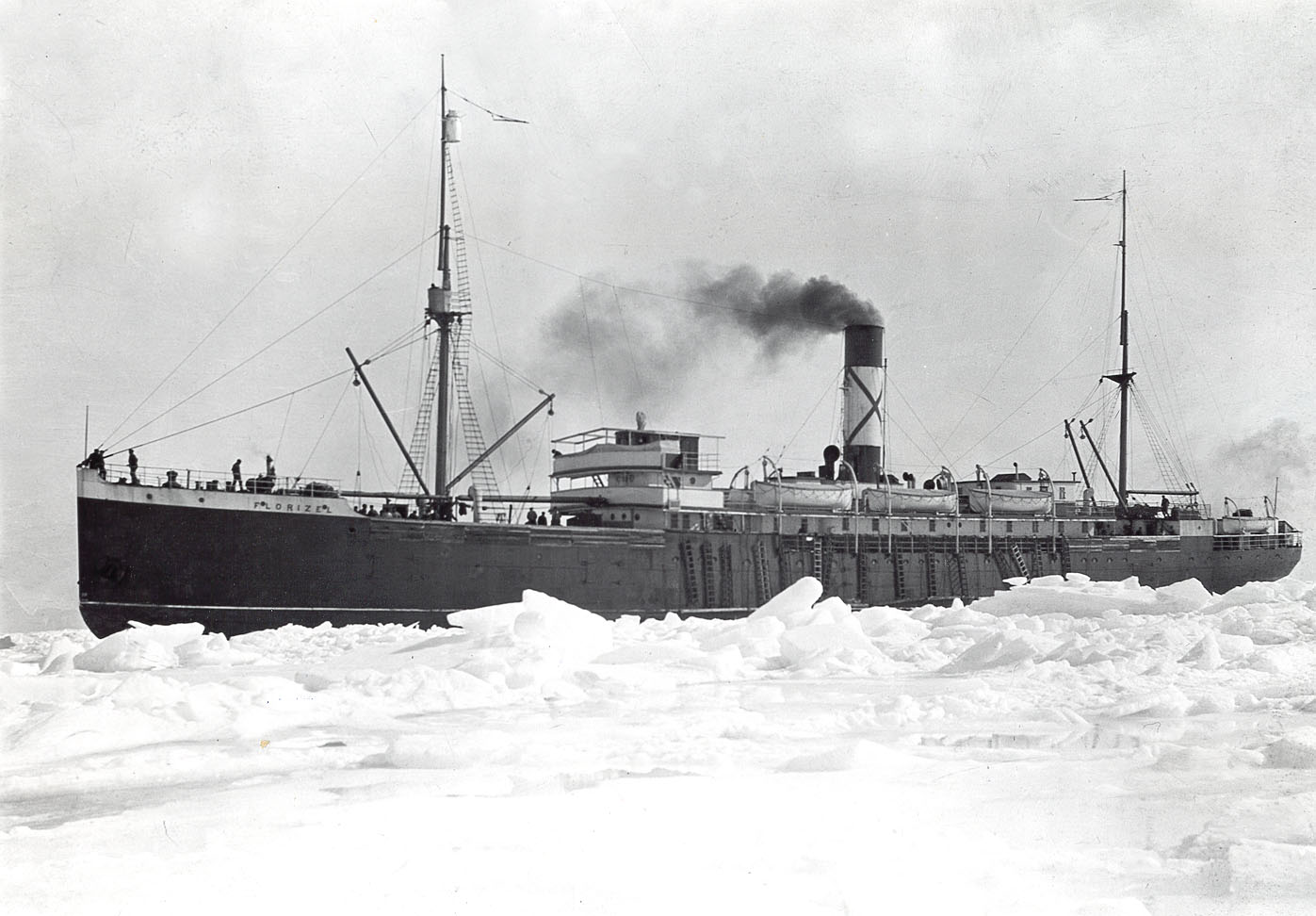
SS. Florizel at the Ice Fields


The SS Florizel was the flagship of of the Red Cross Line owned by Bowering Bros. of St. John’s. Built in 1909, the ship was used as a sealing vessel for many years and later plied a passenger service between St. John’s, Halifax and New York. In 1914 the SS Florizel transported the first 500 volunteers of the Royal Newfoundland Regiment to the Front. One stormy night while approching St. John's on February 24,1918, the ship was wrecked off Cappahayden with a loss of 94 souls. This tragedy became one of the most significant marine disasters in Newfoundland history.

From my historic ship collection - photographer unknown.


Saturday, June 10, 2006

Fishing Room Near Salvage

Fishing Room - a tract or parcel of land on the waterfont of a cove or harbour from which a fishery is conducted; the stores,sheds, 'flakes', wharves and other facilites where the catch is landed and processed.

- Dictionary of Newfoundland English -Story et al

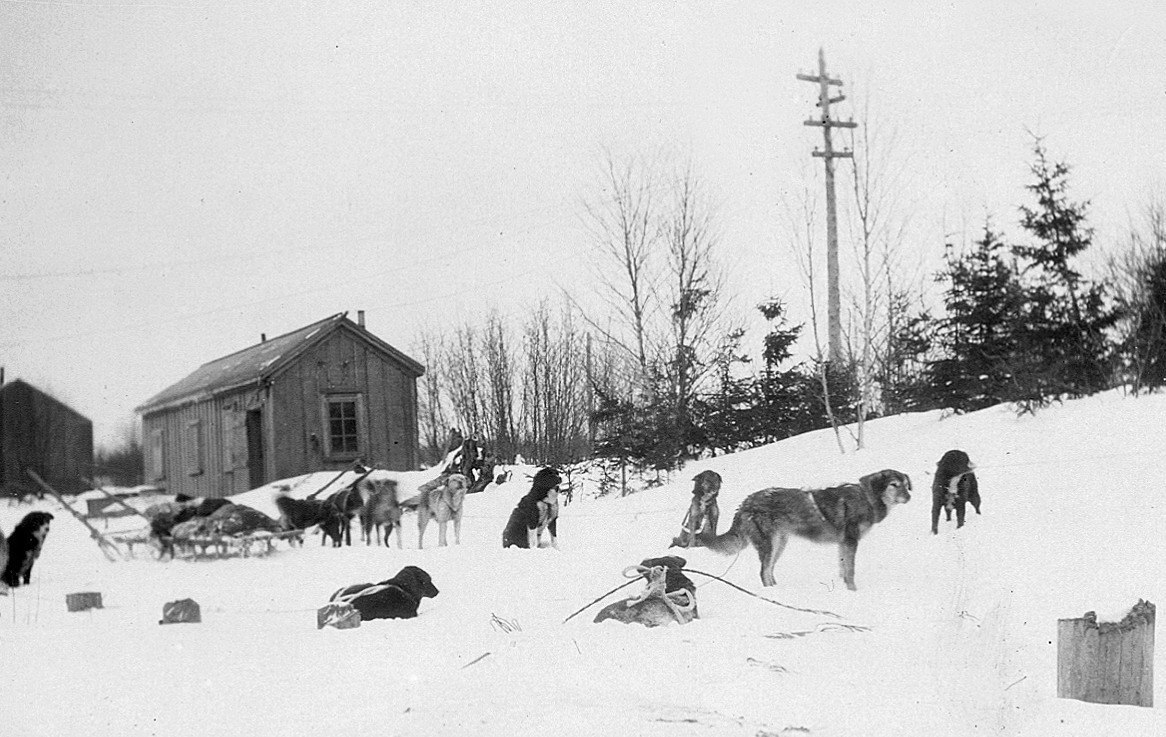
Resting Dog Team - Deer Lake Circa 1927


There were no roads to the pioneering community of Deer Lake in 1927. Travel was by narrow gauge train on the Newfoundland Railway which ran east to west joining St.John's to Port Aux Basques. In winter time, it was horse and sleigh or dogteam.

Communities on the great Northern Peninsula were dependant on coastal steamers and schooners to deliver mail and supplies in summer but in winter, mail was brought by dog team along a small coastal trail to Bonne Bay and then to Deer Lake to catch the train.

This photograph taken by my grandfather - Aneurin Tudor Williams.

Friday, June 09, 2006

Fishing Boats at the Wharf - Brigus South


The small boats of Brigus South rise and fall with the tides while tied to their mooring, sometimes coming to rest on the harbour floor at low tide.


Thursday, June 08, 2006

Eastern Chipmunk


Squirrels are not native to Newfoundland. However, both the red squirrel and the eastern chipmunk were introduced in the 1960's.

The Eastern chipmunk is a small, brownish, ground-dwelling squirrel. They are very easy to identify by their short, pointy heads marked with two white stripes, one above and one below the eye and five black lines with white striping down the back.

The chipmunk has has not adapted very well to the Newfoundland climate. They were introduced to three provincial parks beween 1963 and 1968 and remain common in the park regions but they do not appear to be spreading much beyond the parks. Chipmunks prefer deciduous forests rather than the coniferous spruce forests of northern climes . They are found in southern Canada and the United States.


Wednesday, June 07, 2006

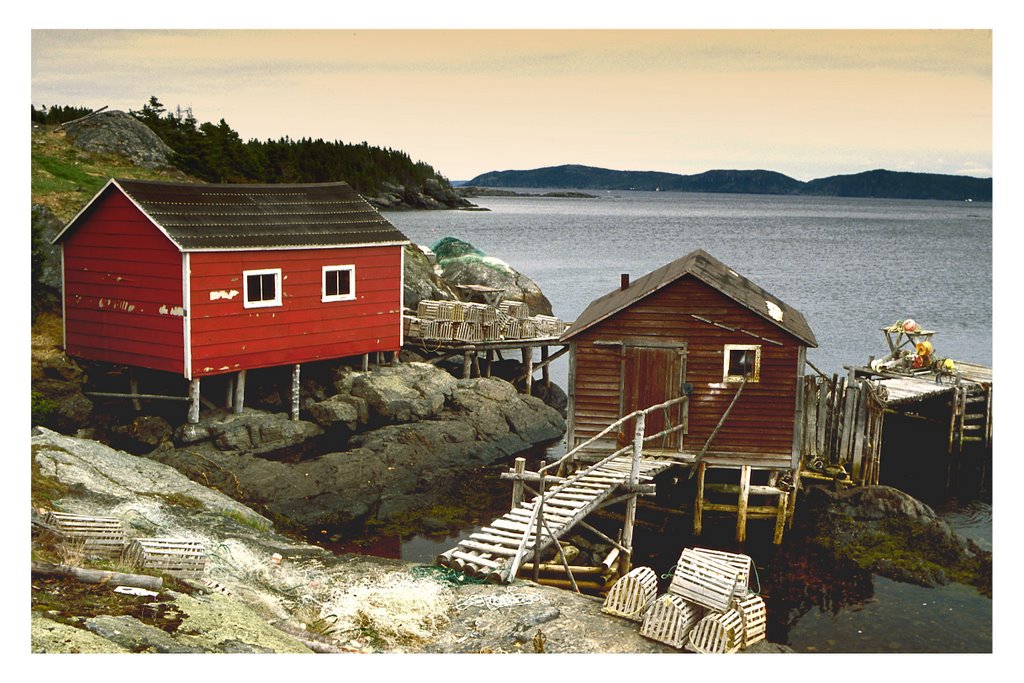
Ochre Fishing Stage - Red Cliff


Fishing stages in Newfoundland come in all sizes and shapes. They may be shacks built from discarded lumber or they may be elaborate government- built properties. The failure of the inshore cod fishery has led to many of these cultural icons to fall into disrepair .

Newfoundland fishermen used an oil-based concoction to paint their stage houses – ochre, paint and cod liver oil extracted from actual cod livers.

Sunday, June 04, 2006

Ready to Sail


I photographed this idyllic scene at the wharf in some forgotten cove. Can you identify the red reflection ?

 Posted by Picasa

Saturday, June 03, 2006

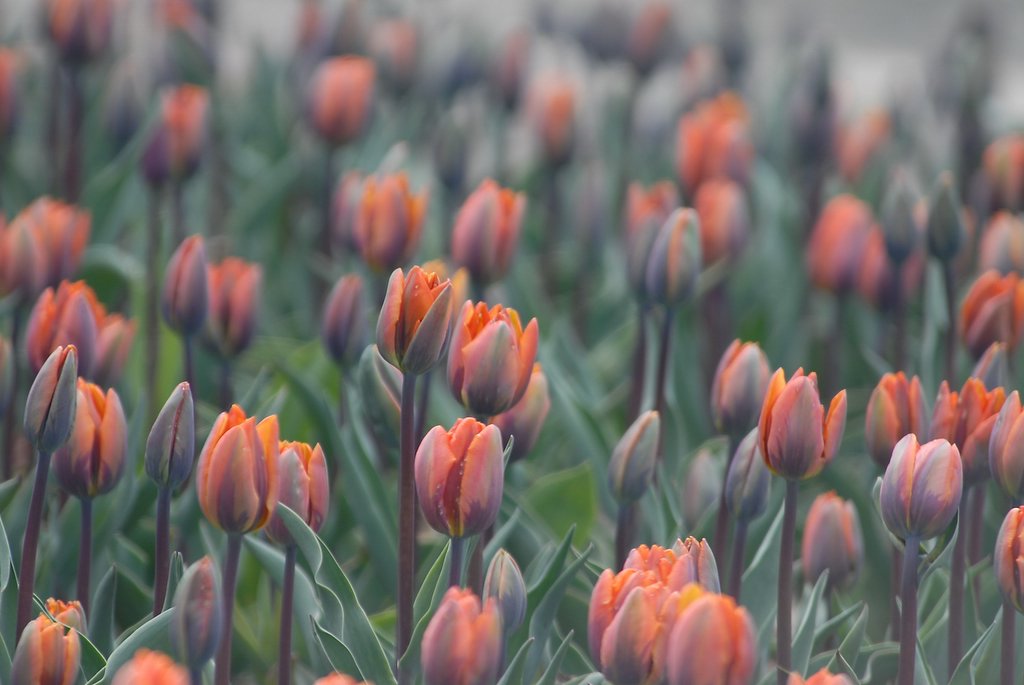
March of the Tulips


"Forward they come, with flaunting colours spread,
With torches burning, stepping out in time
To some quick, unheard march. Our ears are dead,
We cannot catch the tune.
In pantomime Parades that army. With our utmost powers
We hear the wind stream through a bed of flowers."

- Amy Lowell - A Tulip Garden

Posted by Picasa

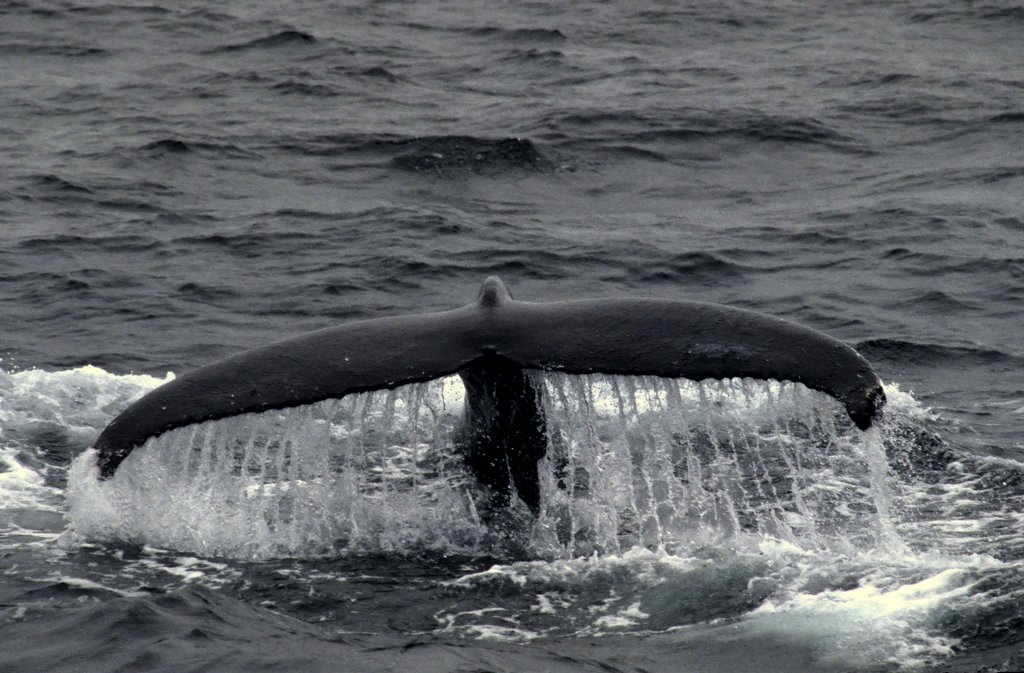
A Whale of a Tail


The Humpback whale is a baleen whale and has the scientific name of Megaptera novaeangliae ("big-winged New Englander"). This whale can measure up to 53 feet long and weigh 40 tons. The humpback has the largest flippers of any of the whales up to 16 feet long. They are very curious creatures and commonly shadow whalewatch boats in the waters off Witless Bay and Bay Bulls. They are not fast swimmers but are quite acrobatic, demonstrating jumps ( breaching), tail slapping and poking their heads out ( spyhopping). Humpbacks are an endangered species. It is estimated that about 3,000 humpbacks live in the North Atlantic and the world population is 8,000 to 10,000. Their tails are quite distinctive and are usually used to identify individual humpbacks.

 Posted by Picasa

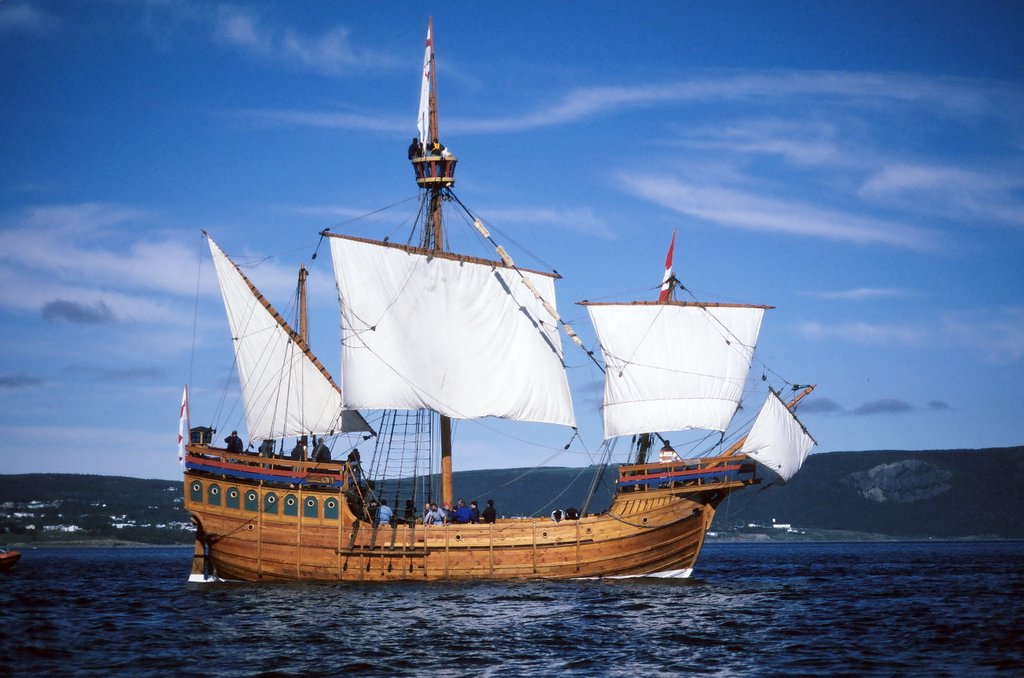
The Matthew


This modern-day replica of John Cabot's ship, the Matthew, is seen sailing into Conception Bay during the Cabot 500 anniversary celebrations of 1997.

Over 500 years ago, John Cabot and his crew set sail from Bristol, England, for Asia aboard the original Matthew hoping to trade goods and commodities with the people who lived there. However, he arrived on the coast of Newfoundland and therefore was the original discoverer of America, not Christopher Columbus as most people are led to believe. In 1997 the replica Matthew followed the same course as John Cabot in 1497 and sailed across to Newfoundland. The ship carried the same number of crew members as the original and took the same amount of time to complete the crossing.

 Posted by Picasa

Friday, June 02, 2006

Ruffed Grouse in ButterPot Park


Ruffed Grouse were introduced in Newfoundland in 1956 and today they are found throughout the island . Populations and can be found all across Canada with their range also extending south to the northwestern and northeastern U.S. These well known upland game birds are most at home in deciduous and mixed woodlands where there are areas of underbrush with scattered clearings. However in winter, they prefer dense coniferous or mixed forest habitats, using the underlying snow for shelter, and to escape predators.

Posted by Picasa

Sunday, May 28, 2006

The Rower


On the first Wednesday in August, tens of thousands of Newfoundlanders converge at Quidi Vidi Lake to watch the rowing crews at the annual Royal St. John's Regatta. Founded in 1818 , it is the longest running sports event in North America. Male female, six rowers and a coxswain to a rowing shell-compete in heats throughout the day wherein teams race up and down Quidi Vidi Lake to win championships in the early evening.

In August, 2005 a new rower appeared at the lake - a life-size bronze statue was unvailed at lakeside. Two years in the making Morgan Mac Donald, 24 year-old native Newfoundlander with a degree in Business Administration and one year of formal art education used the lost wax process to protray a man sitting in a racing hull, rowing across the water. "This sculpture", said Mr. MacDonald, "is an attempt to encapsulate the strength, athleticism and elegance of the sport".

"The Rower is, at its very core, a monument to dreams and to human potential".
- Gil McElrroy

Posted by Picasa

Saturday, May 27, 2006

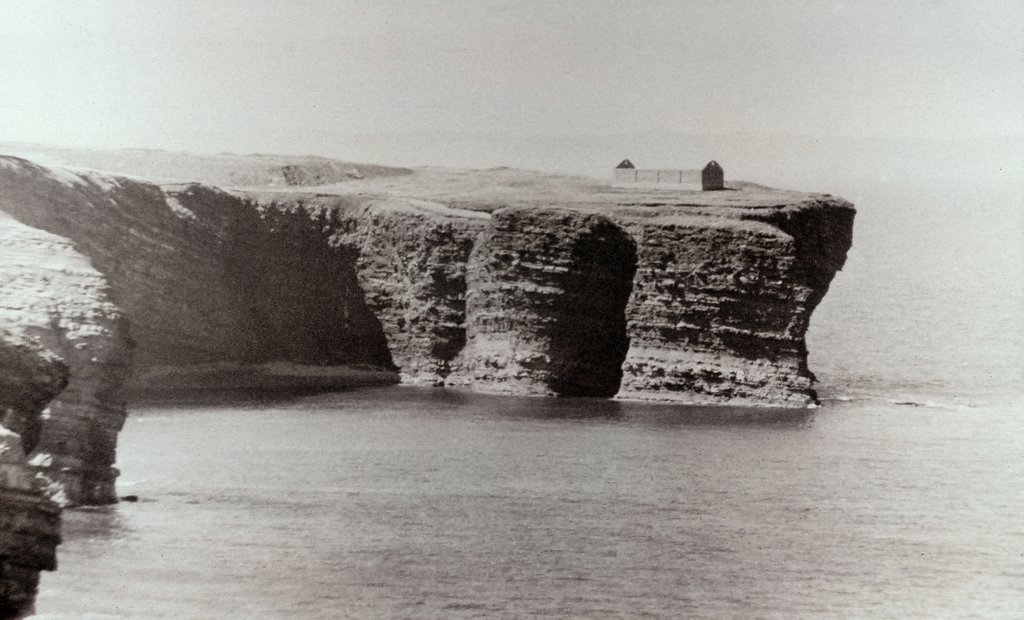
Old Bunker on Bell Island


About 480 million years ago a shallow sea covered Conception Bay and as those millions of years passed, layers of sediment built up on the ocean floor. Under intense pressure these layers of sand and mud enriched with iron became the sandstone, shale and hematite that make up the sculptured cliffs you see on Bell Island today. In the early 1970's I photographed the derilict ruins of a concrete bunker once owned by the Nova Scotia Steel and Coal Company to store their mining explosives. Sadly, this picturesque scene is no more - the old bunker has now been replaced by an unsightly landfill.

 Posted by Picasa

Thursday, May 25, 2006

Tulip Watercolor


The tulips march in proud procession
along the roadside curb, raising watercolor heads
to the misty sun.


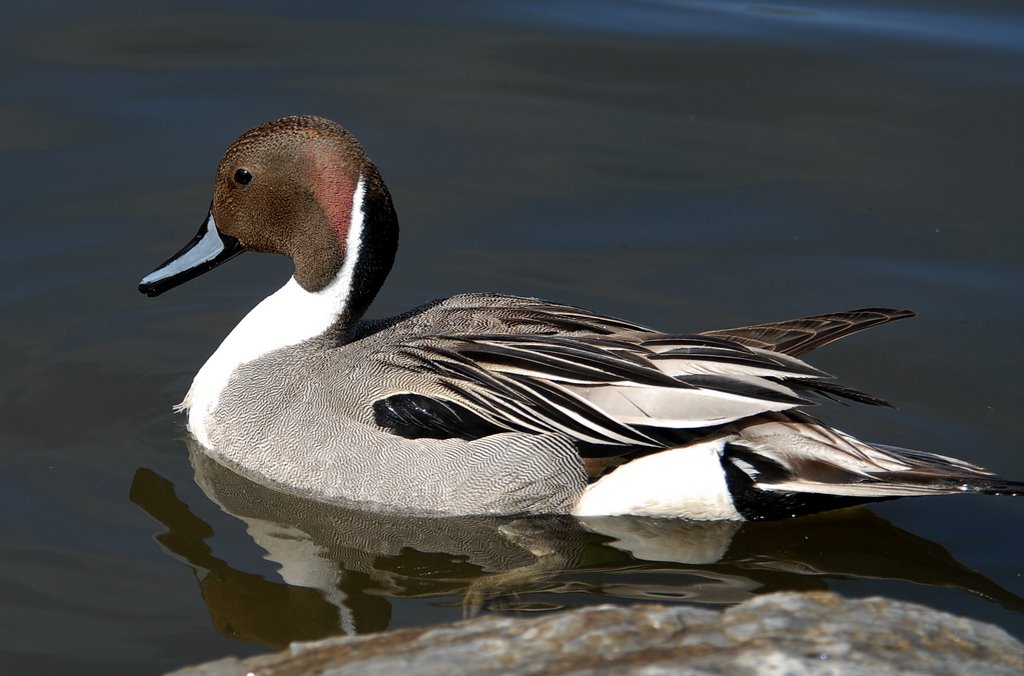
Northern Pintail Duck


The northern pintail duck breeds from Alaska east to Quebec and south to the central Great Plains, the Great Lakes and northern New England. It winters from the central United States south to theGulf of Mexico and the West Indies. It is one of the most graceful and streamlined of our ducks with its slender body and long neck usually carried out stretched. They are very social ducks and often gather in large flocks of hundreds of birds. This bird was rarely seen in Newfoundland in the 1950's but now they are a comon sight in our parks and waterways.


Sunday, May 21, 2006

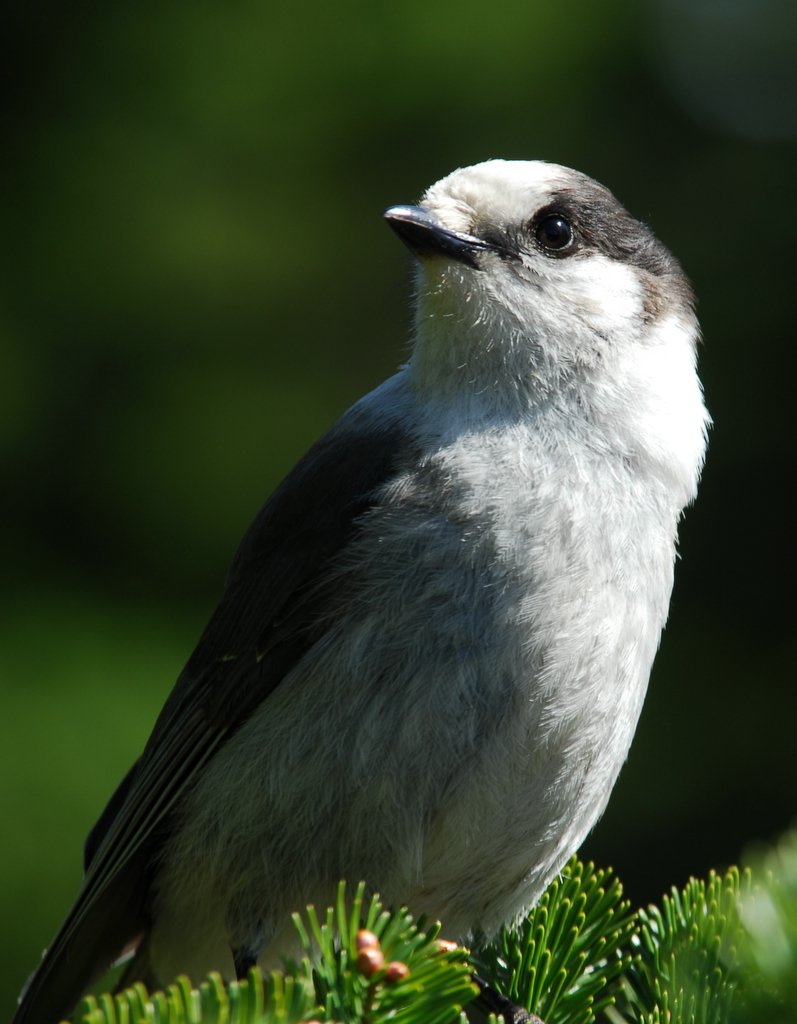
Grey Jay - Victoria Day Weekend


In the Newfoundland forest, the Grey Jay is a beloved, well known bird. Its official name was Canada Jay until recently, since its range is mostly confined to the Canadian provinces. It is a non- migratory bird. Because of its fearless behaviour towards people living and working in the forest it has earned many local names of which Wiskey Jack is the best known, said to come from the mispronunciation of the Indian name "wiss-ka-tjon" or "wis-ka-chon" turned into "whiskey-John."


High Noon on the Witless Bay Barrens


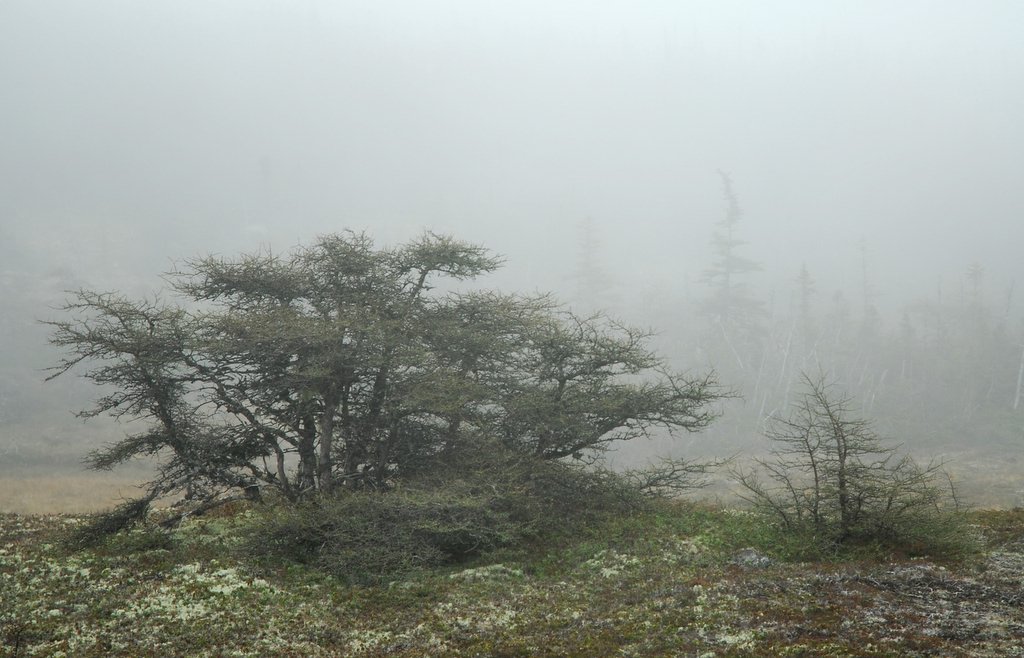
Most of the Avalon peninsula is tundra, known locally as barrens, and is home to flocks of ptarmigan and the most southerly herd of woodland caribou in the world. The land is characterized by bogs and windswept hills and is populated by stunted trees such as tamarack, and waist high dense clumps of balsam fir and spruce known as tuckamore.


Stunted Tamarack In Hawke Hills


The Witless Bay Barrens is an environment of peat bogs, low brush and stunted trees. This arctic/subalpine bioregion with its chacacteristic plant life reaches its southernmost limit here.

Glacial Erratics Near Mobil Big Pond


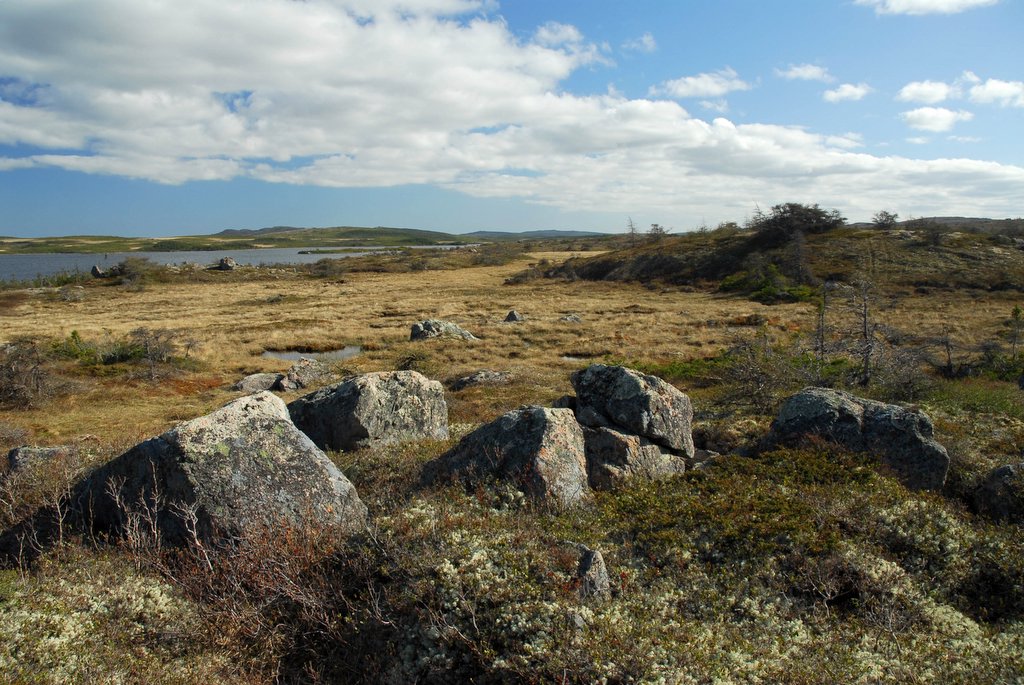
Large boulders, known as glacial erratics, sit where they were dropped by the retreating glaciers thousands of years ago.


Tuesday, May 16, 2006

Evening Light at Cape St. Mary's


While looking through some of my old slides, I found this underexposed photo of the lighthouse at Cape St. Mary's. After scanning to a digital file, I was pleasantly surprised. The graininess, in fact, had improved the mood of this tranquil scene.

Posted by Picasa

Sunday, May 14, 2006

The Mallard Duck


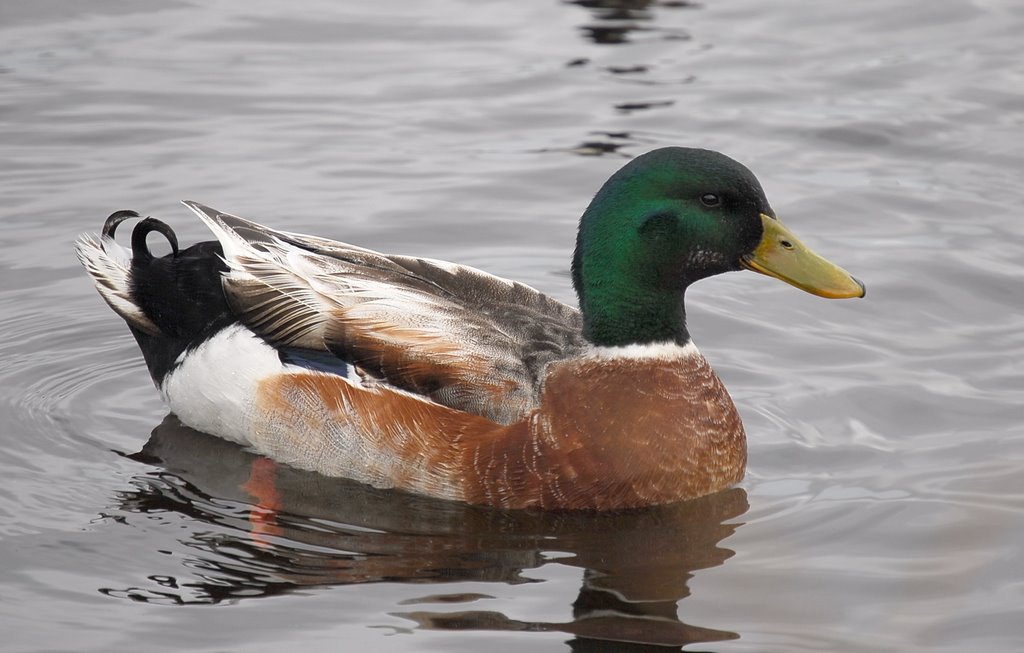
The mallard is a very recognizable large duck. Most people know the drake (male) with its bright green head. The mallard is a puddle duck, and is distributed across all of North America. The female mallard duck is similar to the Black Duck but it is much lighter brown in color. This duck adapts very well to human encroachment and its strong will to survive allows it accept to water/food/shelter as is, where is. It thrives in human enhanced habitat such as the wetland projects of Ducks Unlimited and, indeed, it is this duck that symbolizes the DU logo.


Saturday, May 13, 2006

A River Runs Through It


A river does not just happen; it has a beginning and and end. Its story is written in rich earth, in ice, and in water-carved stone, and its story, as the lifeblood of the land, is filled with colour, music and thunder.
Andy Russel - The Life of a River

Posted by Picasa

Wednesday, May 10, 2006

Cataracts Falls - Colinet


A deep river gorge with its cascading waterfall provides a scenic setting for photos not far from the village of Colinet. Stairs and walkways enable the visitor to descend the gorge and cross the river. Thirty five of the known mosses and liverworts in Newfoundland have been identified in this park.

Posted by Picasa

Tuesday, May 09, 2006

Catch of the Day


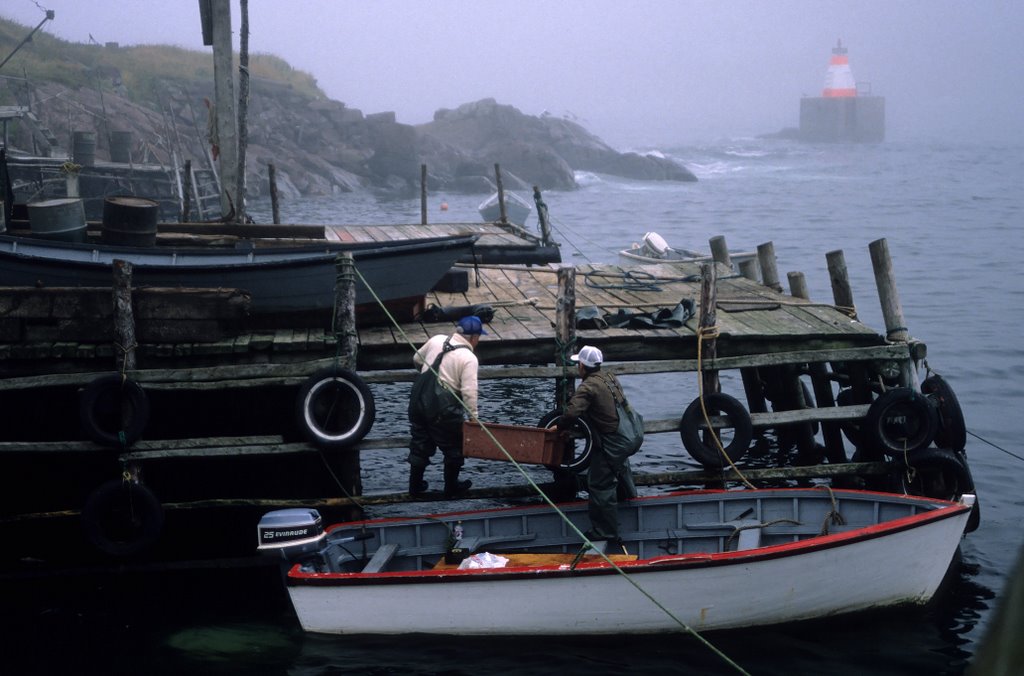
Two fishermen offloading their catch in the mists of the Battery. This is a scene that is rarely seen today since the demise of the cod fishery.


Monday, May 08, 2006

Are We Alone ?


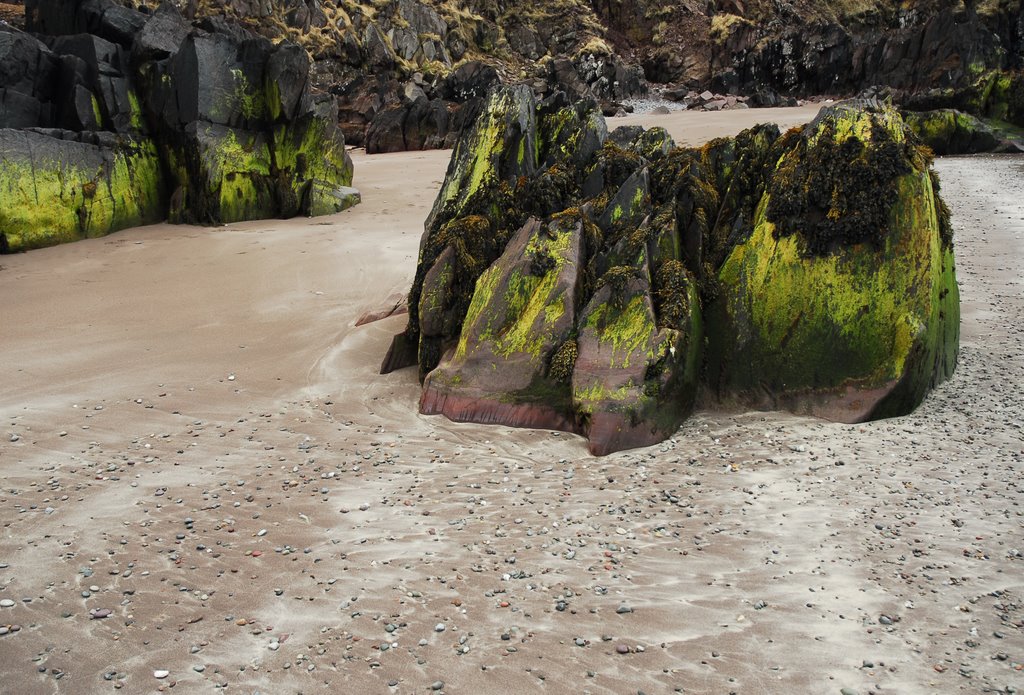
As I was photographing these strange rocks in Gooseberry Cove on Sunday, I noticed that the base looked like the pseudopod of some giant amoeba- like creature and I wondered . . . . .


Posted by Picasa

Sunday, May 07, 2006

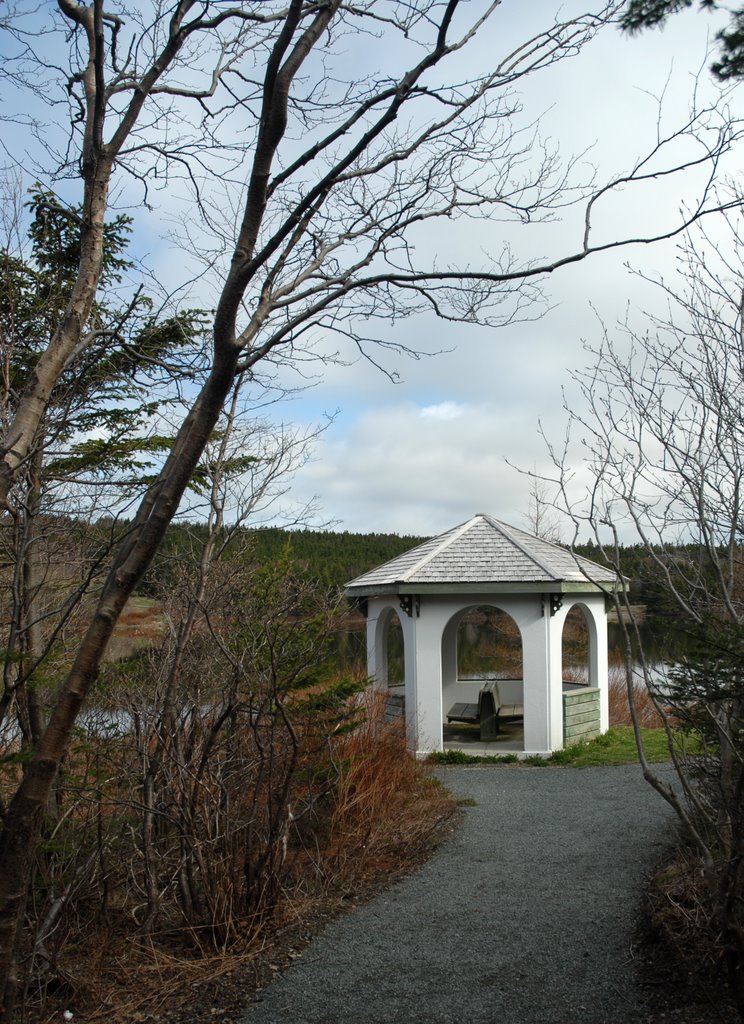
Trail's End


Yesterday, while hiking along the Long Pond trail behind the university, I came upon this lonely gazebo for tired travelers.


House in Patrick's Cove


An old abandoned house stands just below the hill in Patrick's Cove. I wonder what memories were created here.


Saturday, May 06, 2006

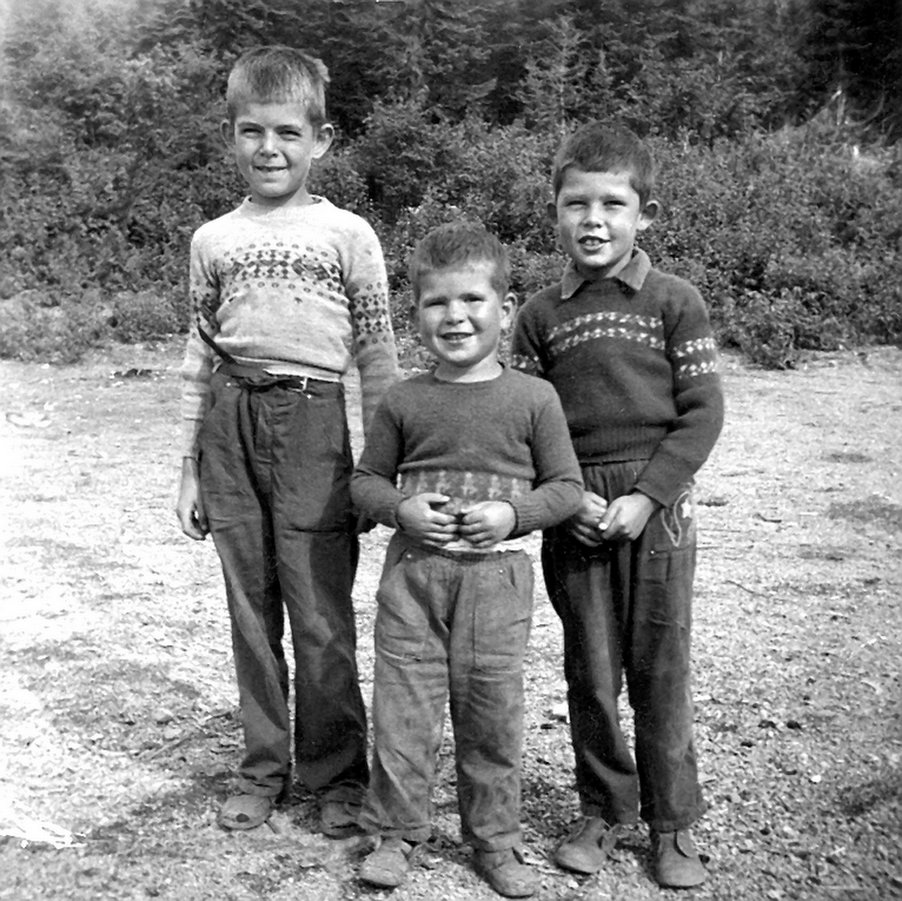
The Three Amigos


Here is another photo from my father's collection, taken while on a camping trip to Birchy Lake in central Newfoundland in the early 1950's. We were happy campers, without a care in the world, wearing the latest outdoor styles.

 Posted by Picasa

Thursday, May 04, 2006

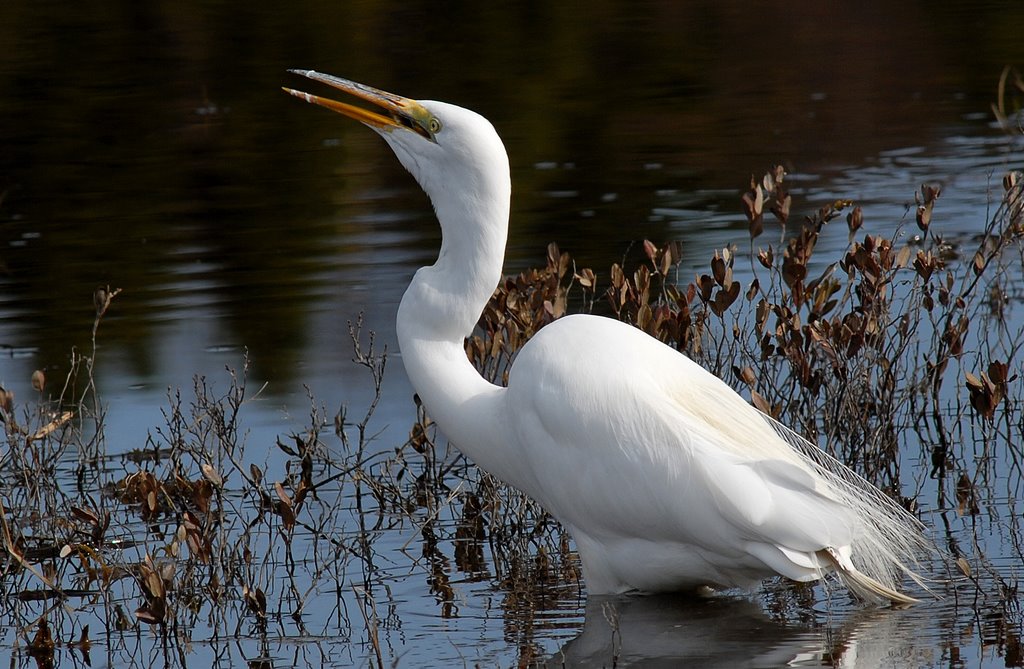
Great Egret in a Newfoundland Marsh


See that great egret
at the marsh's edge, solitary,
still? Mere pretense
that stillness. His silence is
a lie. In his own pond he is
of some renown, a stalker,
a catcher of fish. Watch him.

-
Ted Kooser, U.S. Poet Laureate


Tuesday, May 02, 2006

Lobster Cove Lighthouse


Lobster Cove Head lighthouse was built in 1897 and is located in Gros Morne National Park on the west coast of Newfoundland. It is a cast iron structure built locally by Victoria Iron Works of St. John's. The Newfoundland government, being very concerned for fishing and shipping safety in the outports, built the lighthouse on a major headland also protecting the shipping lanes through the Strait of Belle Isle. Until the lighthouse was completed, a local fisherman kept a seal oil lantern burning in his home to help his neighbours find their way from the fishing grounds. Today Parks Canada and the Canadian Coast Guard have joint responsibillity for tending the light. The park offers an interpretive program illustrating the history of the lighthouse and the people it serves. Lobster Cove Lighthouse, in its wild and beautiful setting, is always a highlight during a visit to Gros Morne National Park.

Posted by Picasa

Great Egret


This magnificent heron with its dazzling white plummage is an uncommon bird in Newfoundland but well known in the southern United States. This bird arrived three weeks ago and has found a ready source of stickle-backs in a freshwater marsh near the Confederation Building in St. Johns. This beautiful bird nearly became extinct in the early 1900's when it was hunted mercilessly for its long plumes during nesting season. After hunting became illegal, the birds gradually increased in numbers and are now very common in warmer southern climates.

.